
Charlie Hickman, a Longmont Artist and Teacher, on the Practice of Making Art That Exists Only for Itself
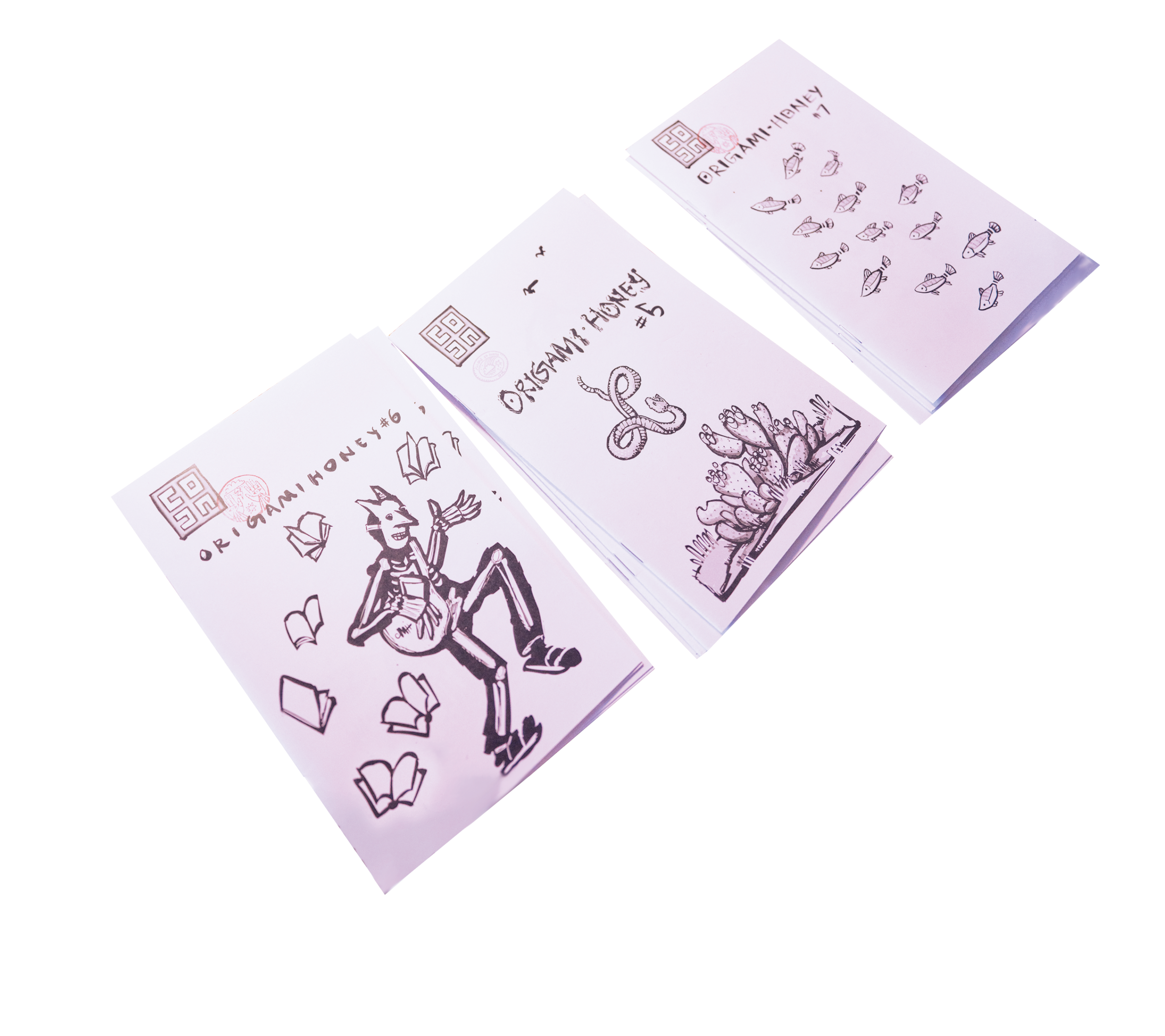
You may spot it on a wooden table at Cavegirl Coffeehouse in Prospect: a simple black-and-white booklet, or zine, titled Origami Honey. Featuring a feline protagonist—a small, white cat who pilots a giant robot called a Catbot—the illustrations guide readers through a wordless adventure.
There’s more to the story than meets the eye.
“[Catbot] landed on Earth in the Mesozoic and had to wait for cats to evolve,” says the zine’s author, Charlie Hickman, an artist and art teacher who starts his 17th year this fall at St. Vrain Community Montessori School. “And then, finally, it found a cat.”
The Catbot’s purpose? Dismantling systemic racism in the U.S.
“I have this really silly idea crashing into something that I want to take very seriously, which is the acts of violence that kept people of color from being safe emigrating to the American West,” he says.
Hickman isn’t sure who sees the zines he drops off anonymously, but that’s part of the fun. “It is part of the culture of zine making from the ʼ90s,” he says. “To find a homemade zine in public is part of the thrill. It is a zine’s natural habitat.”
Origami Honey is his second zine series. His first, Day Dreamer, ran eight issues. Zines are one of Hickman’s many projects, alongside painting and puppetry.
Their migration is timed to coincide with hatching insects, and that’s when these aerial skills pay off. Bank Swallows may cover up to 200 miles a day traveling between breeding grounds in North America and overwintering sites in Central and South America, flying roughly 3,000 to 6,000 miles one way each spring and fall.
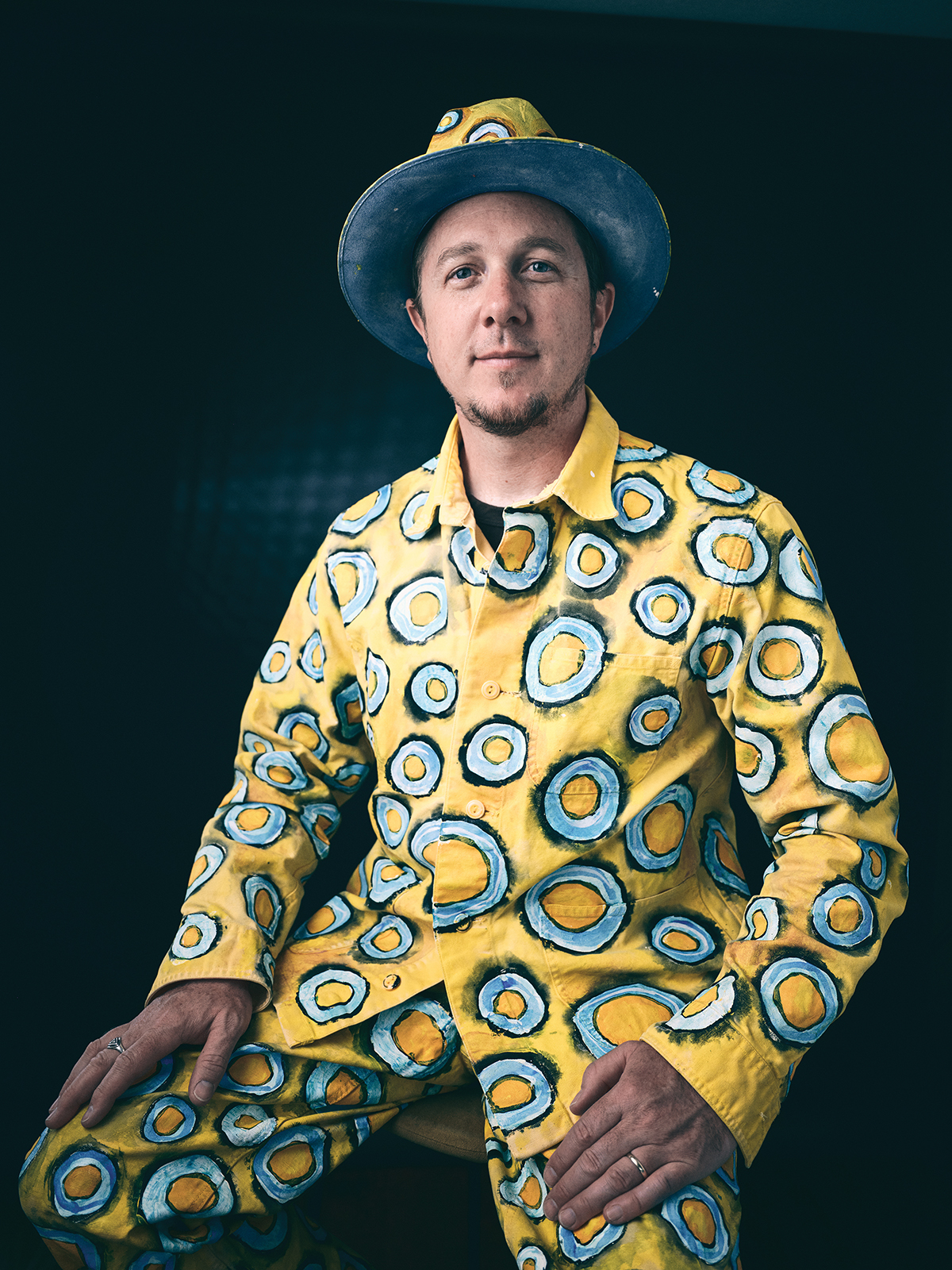
A self-described “mountain child,” Hickman grew up around Boulder before earning a liberal arts degree with an art major at Fort Lewis College in Durango, where he took his first painting class in 1996 and has been painting ever since. He later returned for his teaching license and, in 2010, landed in Longmont with his wife, Maria, and their son, who turns 19 in August.
Hickman doesn’t know if others understand where his work is going, but he insists that’s not the point.
“I think art should be every artist asking themselves, ‘What should be in this world?’ Not, ‘What should be useful?’” Hickman says. “When I think of ‘art for art’s sake,’ I think about my painting practice.”
Every October for the last decade, he’s displayed paintings at OZO Coffee Roasters in Boulder. If no one buys anything, Hickman says, he has no trouble giving them away to friends. At one point, faced with a stack no one was interested in, he whitewashed them and reworked the canvases into a series he called “Death of My Art Career.”
“I rework them, and I become more playful with them,” he says. “And, eventually, they’re just kind of friends that hang out in the studio and gather paint.”
He brings that same “art for art’s sake” ethos into his classroom.
“A big part of teaching is magnifying [students’] own expression and showing them that it’s important to record and create what you feel and how you see, because you’re the only one that’s going to see and feel that way,” Hickman says. “Acknowledging that diversity of thought and expression is the highest goal for elementary level.”
As for his own work, Hickman doesn’t take himself too seriously.
“It’s a little bit like a clown stumbling through all this serious stuff,” he says. “And I think I identify with that a little bit.”