
Tiny Riverbank Burrowers Get a New Home
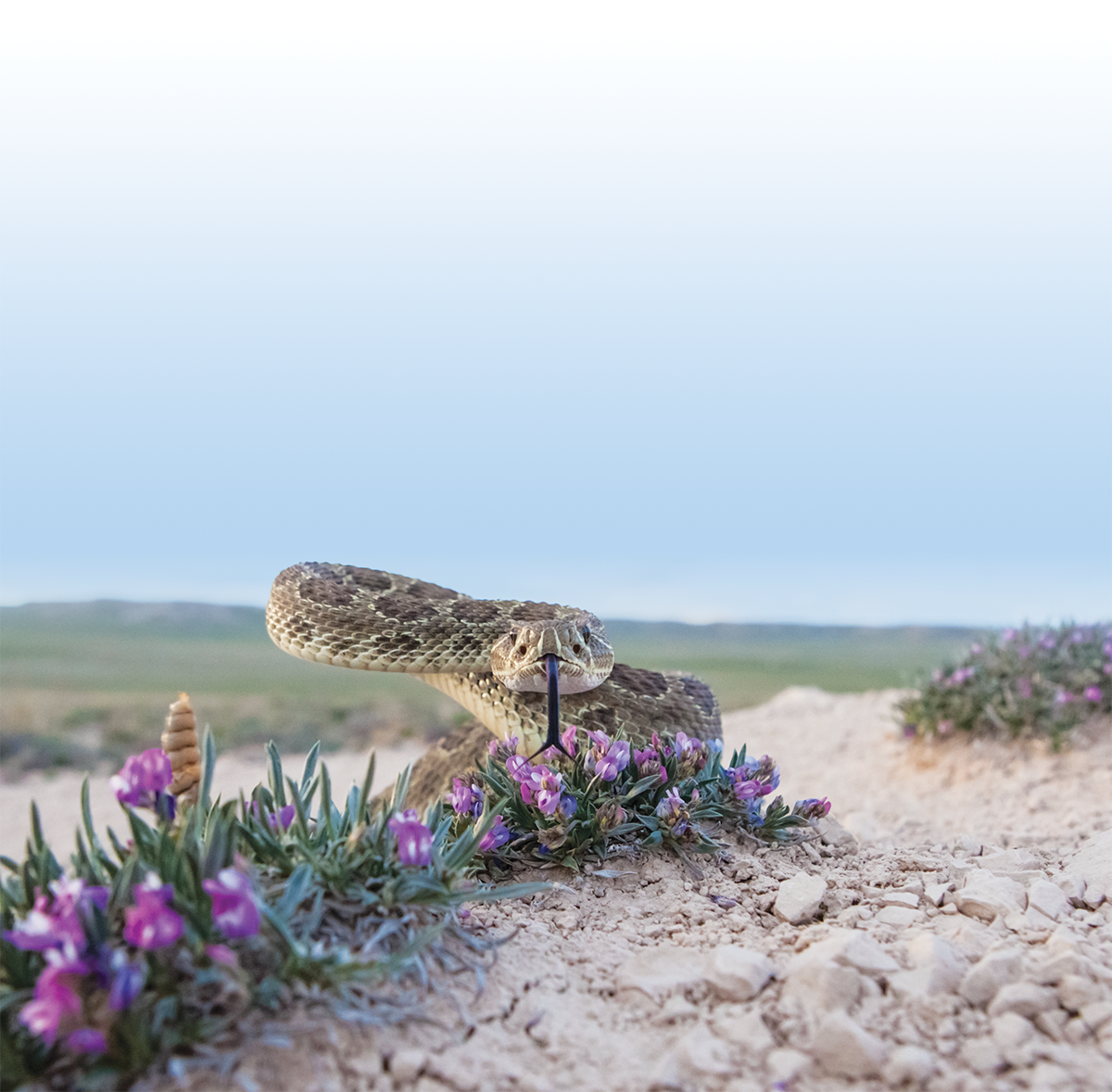
As the weather warms in the spring, wildflowers start to bloom, and prairie rattlesnakes emerge from their dens. With their dry, buzzy rattle, these snakes are as much a part of Western film lore as dusty trails and red rock canyons. Rightly so, as they are an essential part of the prairie ecosystem. The only dangerously venomous snakes native to Colorado’s Front Range, prairie rattlesnakes have a well-earned reputation as ambush predators, meaning they wait quietly and strike when prey comes close.
These longtime area inhabitants call for our regard, respect, and 30 feet of distance whenever possible. Remember: Rattlers have little interest in humans and prefer to be left alone. Their distinctive rattle isn’t a threat but a courtesy—a clear warning that you’ve come too close and it’s time to give them space.
On the Hunt
A prairie rattlesnake typically eats approximately 200% to 300% of its body weight annually. Because their diet includes rats and mice, they quietly tend to our ecosystem and provide natural pest control for agricultural fields.
The Long Game
As predators, these rattlers are strategic. They don’t chase or stalk. When hunting, they pick a spot, coil up, and wait for hours—sometimes days. They favor places where they can blend in and vanish so predators and prey cannot easily detect them. While waiting, a rattler flicks its forked tongue to sample scent trails. Heat-sensing loreal pits between the eye and the nostril on each side of its head act like tiny infrared cameras, tracking animal movement even in low light. Eventually, prey wanders close to the predator. A young prairie dog or hare may wander close. Only then, without a warning rattle, does the snake strike. Its hollow fangs, normally folded against the roof of its mouth, swing down like switchblades when it’s time to bite and deliver venom that rarely kills prey immediately. Instead, the rattler tracks its wounded prey, waiting for the venom to immobilize it before swallowing the animal whole.
On the Menu
For all their reputation, rattlesnakes aren’t just predators. They are also a key prey species for red-tailed hawks, golden eagles, coyotes, and bobcats. Whether predator or prey, the prairie rattlesnake is an essential part of the prairie ecosystem’s food web.
Shake, Rattle, and Warn
Prairie rattlesnakes aren’t born with rattles. After they first shed their skin—usually within a week or two—the first true rattle segment, called the button, forms. Only after the second shed does the snake’s tail have enough segments to produce a faint buzz. Each subsequent shed adds another interlocking segment to the rattle.
Wintering With Company
In winter, hundreds of rattlesnakes gather in large underground groups called hibernacula. They migrate several miles from these shared dens to reach summer hunting grounds before returning in cooler weather. Explore a Colorado hibernaculum through the RattleCam: rattlecam.org. Even though rattlers gather in communal winter shelters, they don’t truly hibernate. Instead, they enter brumation—a reptilian dormancy when metabolism slows, but they still wake periodically to drink water, unlike hibernating mammals.
Know Before You Go
Lucero Torres, senior ranger at Boulder County Parks & Open Space, encourages park visitors to remember “that rattlesnakes share our open spaces, and with a little awareness, we can all explore safely and enjoy our time on the trails.” She shares this advice:
- Look for prairie rattlers from March through October when they are most active.
- Stay alert. Skip the earbuds and portable speakers so you can hear and respond quickly to a warning rattle.
- Watch your step (and your seat)! Look carefully before stepping or sitting; snakes rest near rocks, logs, and sunny patches.
- Be sure to always leash your pup.
- Give snakes 30 feet of space and never try to move or handle one.
- Call the park’s nonemergency line or animal control if you see a rattler near gathering areas like restrooms or pavilions.
- Call 911 promptly if bitten by a rattlesnake. Venomous snake bites are medical emergencies requiring immediate care. The bite can cause pain, swelling, and tissue damage, but fatalities are rare if the person bitten receives antivenom at a medical facility. And remember, never cut the bite, suck the wound, or use a tourniquet.
Latin name: Crotalus viridis
Weight: Adults average about 1 pound (often more if they have recently eaten)
Length: Adults on the Front Range typically are 28 to 39 inches