
Hotel Longmont is Designed to Belong Downtown—from the View to the Bricks to the Art on Its Walls
Photography by Heather Burns
Spend enough nights in new hotels and they can begin to blur together: the same vaguely tasteful lobby, the same anonymous guest rooms, the same sense that you could be almost anywhere. Hotel Longmont may well be the antidote. Opened in June in the heart of downtown, the 84-room boutique hotel has all the trimmings, including a rooftop bar and restaurant. And perhaps best of all? Its decor is the interior design equivalent of locavore.
“We sourced everything we could from the area,” says Ellen Tichenor, creative director for the Thrash Group, the firm behind the property. “There were things we could do that were walking distance. [A few] doors down is a frame shop; across the street, there are so many bookstores. The local plant lady [Happy Day Plants] was catty-corner … We could actually do so much on foot that it was amazing.”
But if you’re picturing wagon wheels, antlers, and other Colorado tropes, think again. The hotel’s unlikely muse is Elizabeth “Betsy” Rowell Thompson, an advocate of temperance and a philanthropist who never actually lived in Longmont but left an indelible mark on it.
“We were fascinated to learn that Longmont started as a planned utopian community,” says Arielle Walrath, principal and creative director at Might & Main, the branding and design company that worked on the hotel’s design. “Unlike other utopian communities in the West, Longmont lasted. We believe that may have been due in large part to Betsy’s backing.”
In 1871, Thompson purchased an entire city block and built Colorado’s first public library, filling it with more than 300 books and more than 3,000 artifacts from her own art collection. Long before the arrival of Carnegie libraries, she envisioned knowledge as the foundation of civic life.
Today, the hotel sits in the same downtown area where Thompson built her library—a fitting reincarnation of her vision.
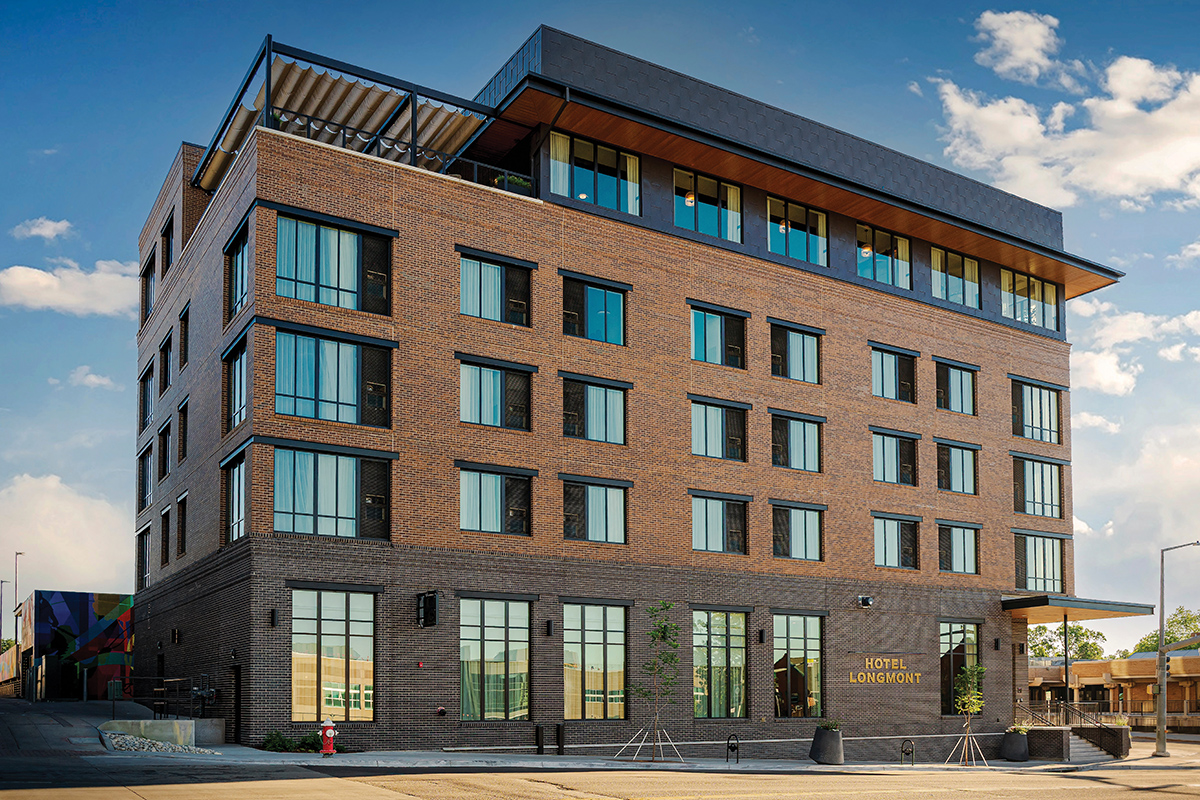
“We’ve studied the brick [exterior] from very early on, making sure it was something that fit within the community and the existing buildings … [even using Google walk-throughs] just looking at the facades of the buildings,” Tichenor says.
The architecture was conceived as a respectful neighbor rather than a flashy newcomer, designed to feel as though it had always belonged on Longmont’s main drag.
“We wanted to ensure the building sat well on the block, fit within the architectural fabric of the downtown area, and set itself as an anchor for the growing Longmont community,” says architect Neil Polen of Dale Partners Architects.
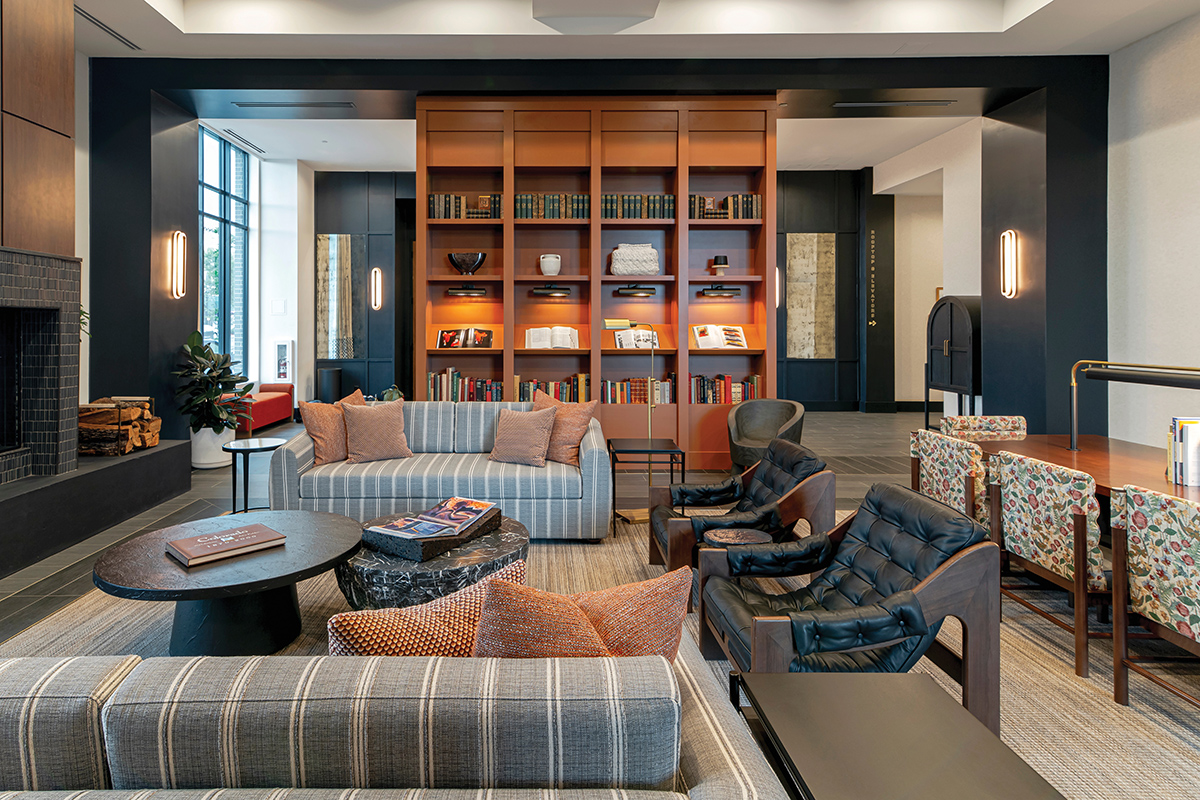
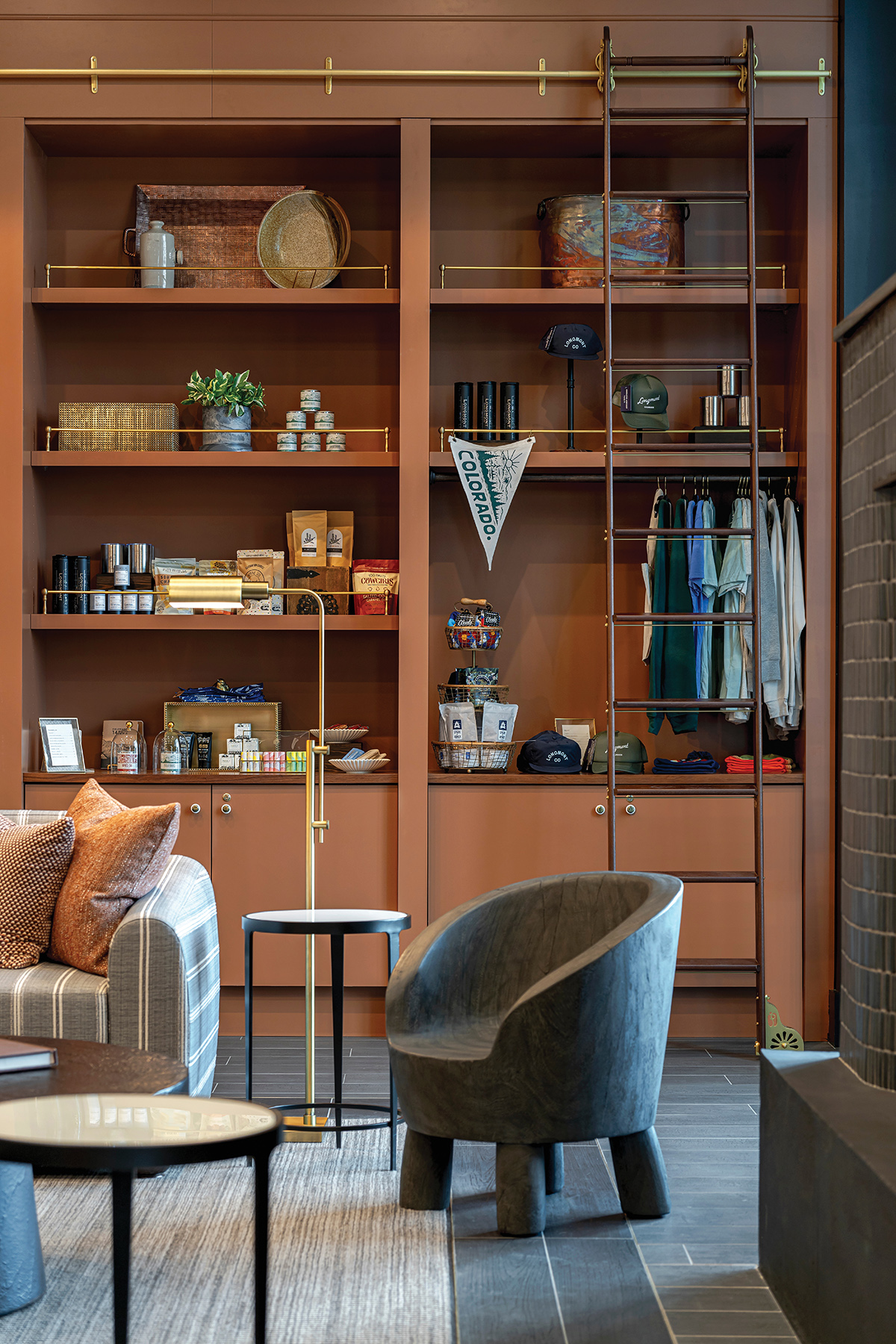
With help from Might & Main and Katy Curtis of 75 Degree Design Studio, the team imagined the home Thompson might have built had she chosen to live in Longmont herself, including a curated library filled with beautiful books that encourage lingering rather than doomscrolling. Vintage books are “sourced from probably seven different places at least,” Tichenor notes, including local shops Barbed Wire Books, Composition Shop, Vintology, Longmont Museum, and Front Range Mercantile.
“We did try to keep bookmarks from the local bookstores. If there was a story to them or something that showed life to them, we just tried to keep that in there and almost just lean into that. I feel like these books have been everywhere and lived all sorts of lives. They are all in the lobby, and in the millwork.”
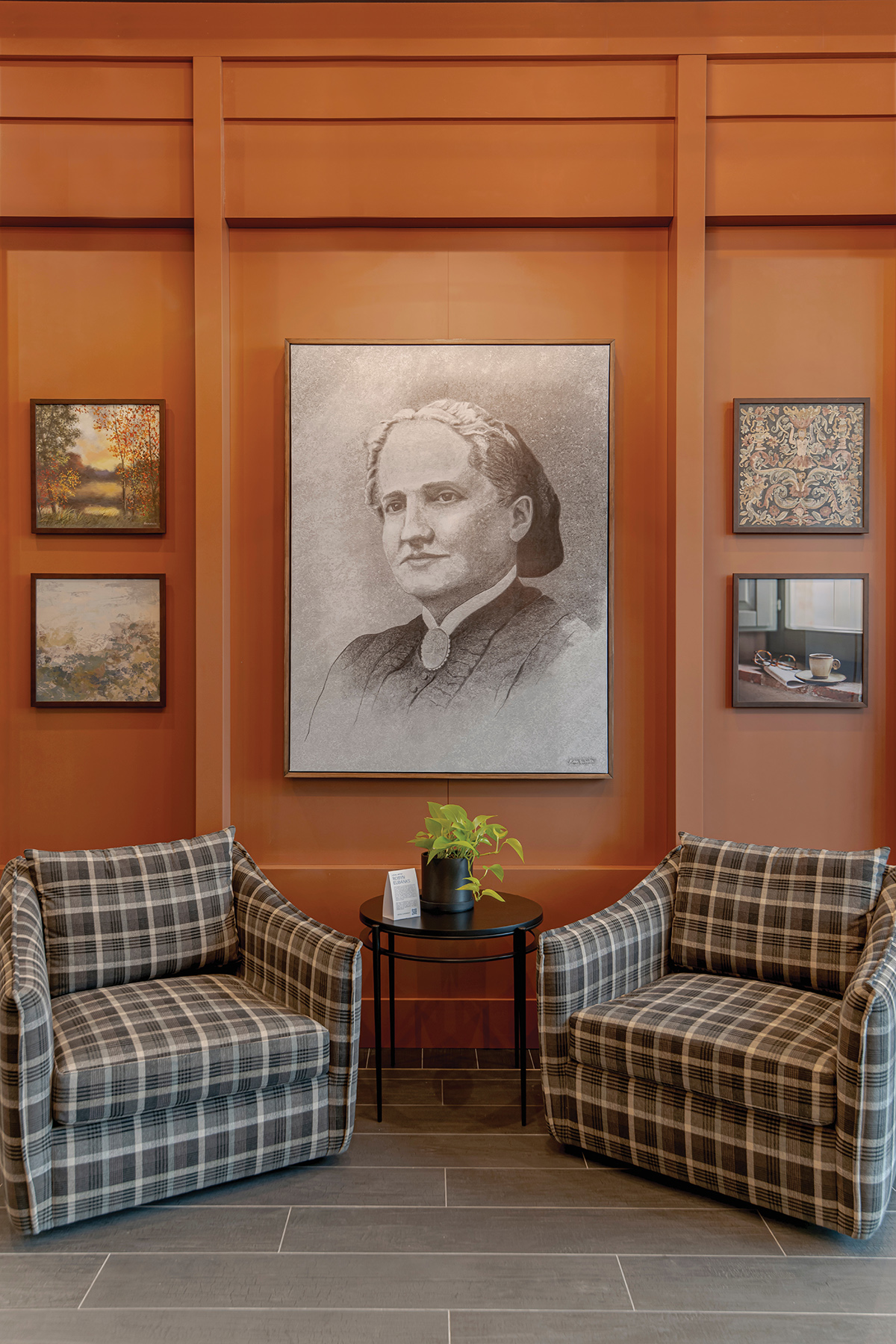
Throughout the hotel’s public spaces, gallery walls mix found and contemporary artwork, including pieces by Boulder County artists Robyn Eubanks, Anna Valenti, and Andrew Barker. Eubanks completed a commissioned portrait of Thompson that will watch over the lobby.
“I saw a printed flyer in Longmont advertising the call for artists,” Eubanks recalls, noting that she toured the property before beginning the commission to get a sense for the space. “I was excited to apply for the portrait commission because I enjoy figurative painting and drawing, and I expected that a large-scale portrait would be a fun challenge, which it was.”
Most of the other walls aren’t static. In partnership with the Longmont Downtown Development Authority (LDDA) and the Longmont Creative District, Hotel Longmont has launched its first rotating gallery program, inviting local artists to submit work for biannual exhibitions displayed throughout both the lobby and the rooftop restaurant. Every piece is available for purchase, and remarkably, artists receive 100% of the proceeds.
“The hotel owners wanted to embrace Longmont’s history and creativity. They identified two feature walls for local artists to showcase and sell works,” says Kimberlee McKee, the executive director of LDDA. “It is a great way to expose local talent to visitors from throughout the world.”
The effect is more than decorative. The local art pieces transform the hotel into a living gallery that evolves with the seasons. Returning guests won’t simply revisit familiar spaces; they’ll discover new exhibitions that reflect Longmont’s changing creative landscape. For local artists, the hotel becomes a prestigious platform. For visitors, it offers something increasingly rare: an authentic encounter with a community’s living culture rather than a carefully packaged version of it.
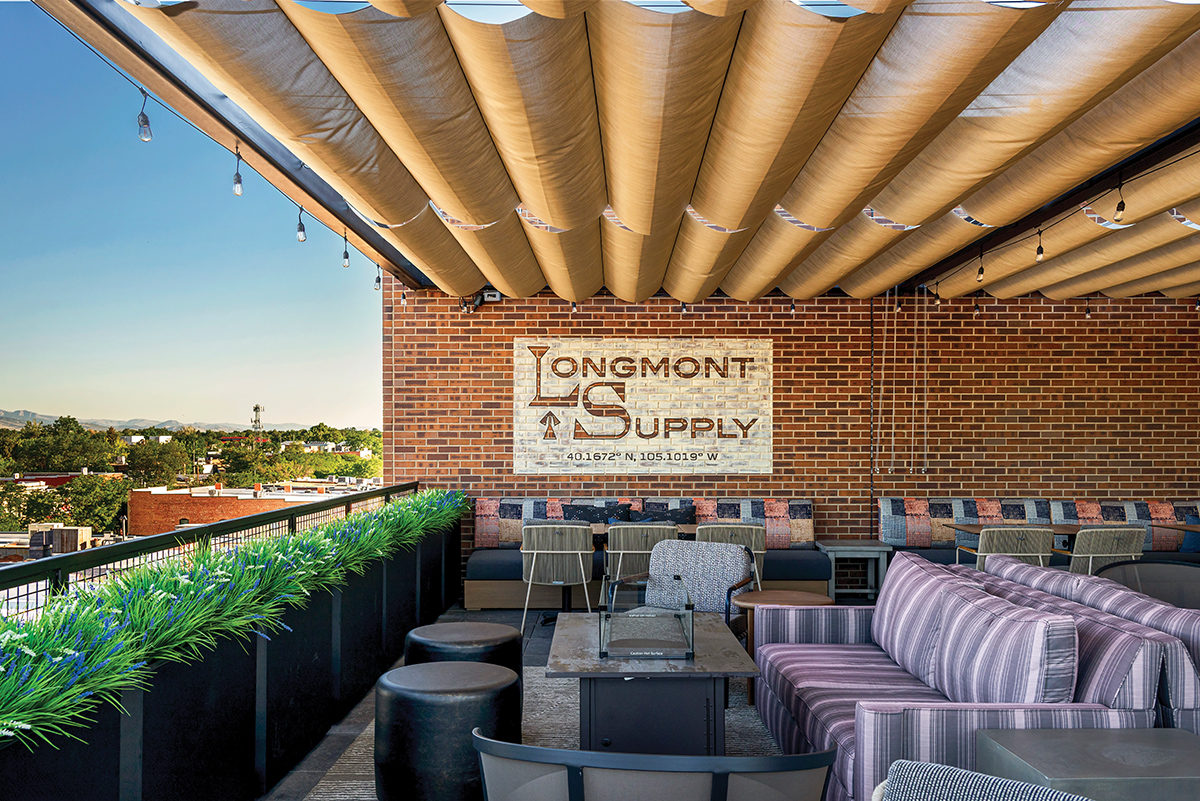
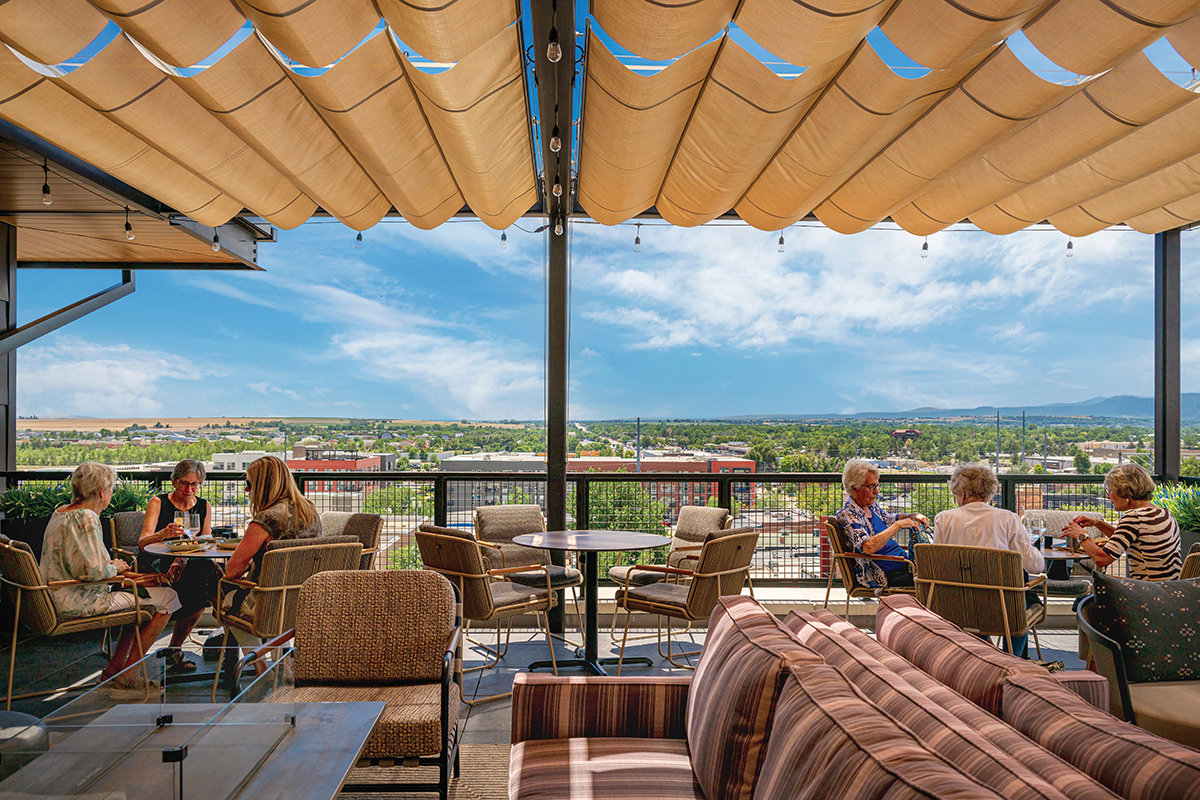
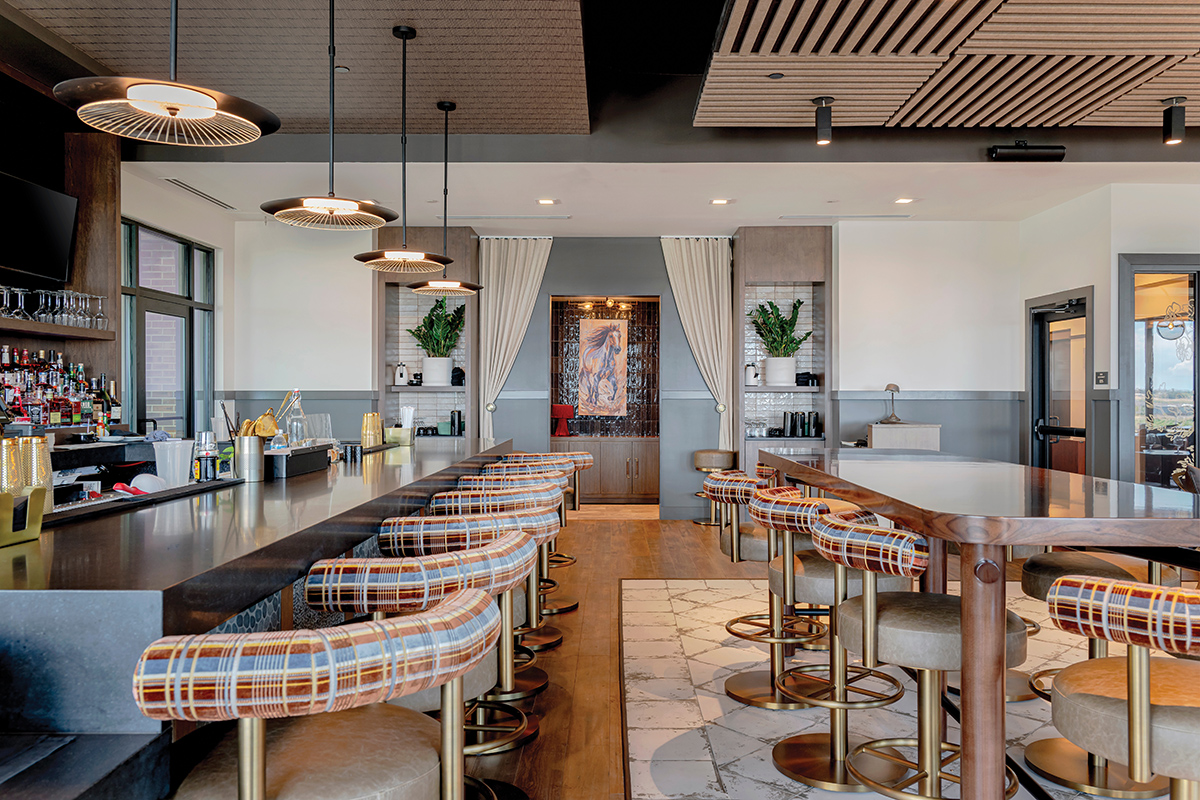
Even the cocktail program at the 5,000-square-foot rooftop bar and restaurant, Longmont Supply, references the region with Prohibition-era drinks, nodding both to Thompson’s temperance ideals and to the colorful history of Longmont’s saloons. Among the tipples on the menu? Longmont Supply Newly Fashioned, with Dry Lands Distillers whiskey, orange bitters, sugar, and Luxardo cherries, which can be sipped while enjoying showstopping views of the Front Range.
“We actually designed the building from the top down, knowing that sight lines to the mountains from the rooftop were critical,” says Polen, adding that architecturally, maximizing that panorama was vital.
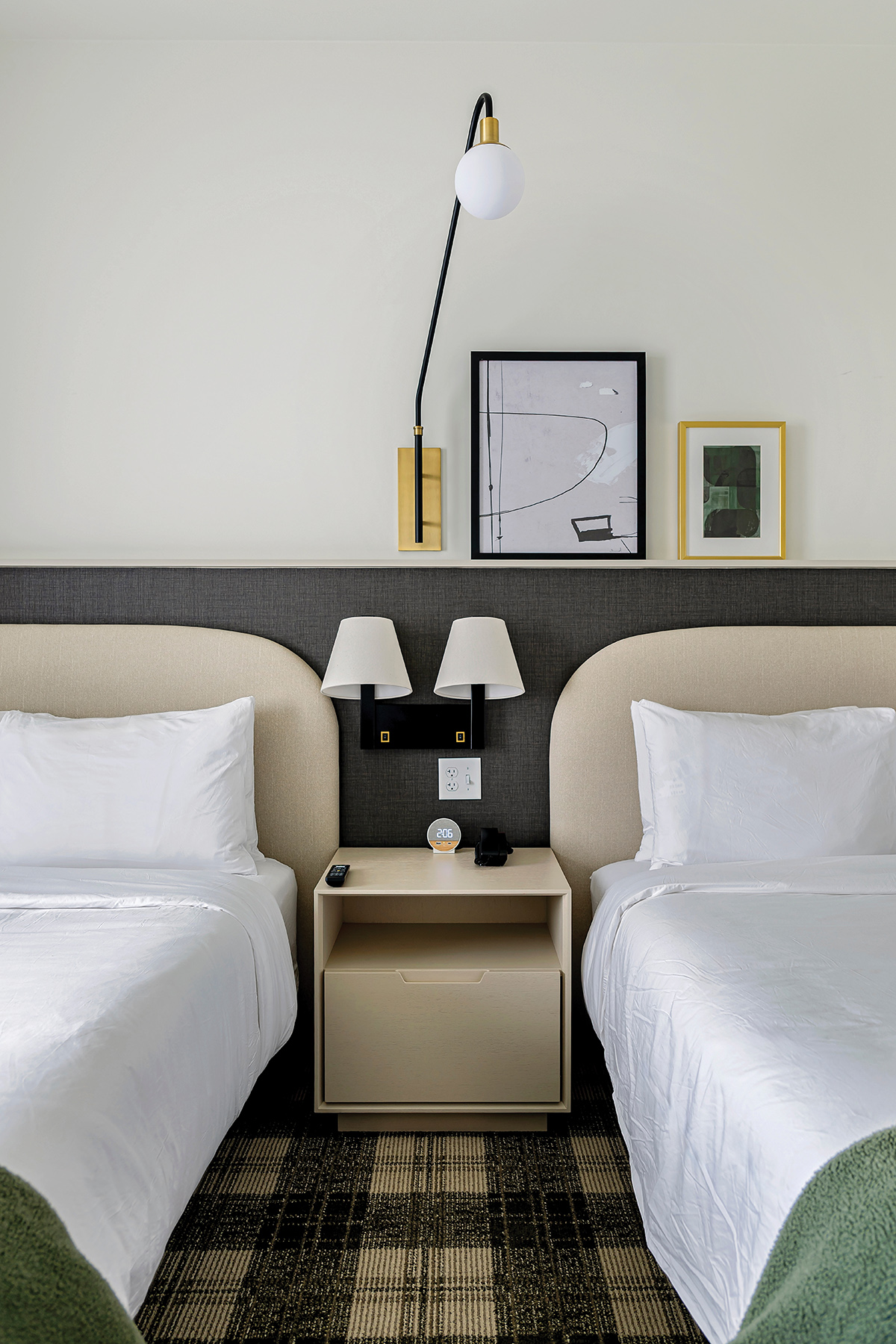
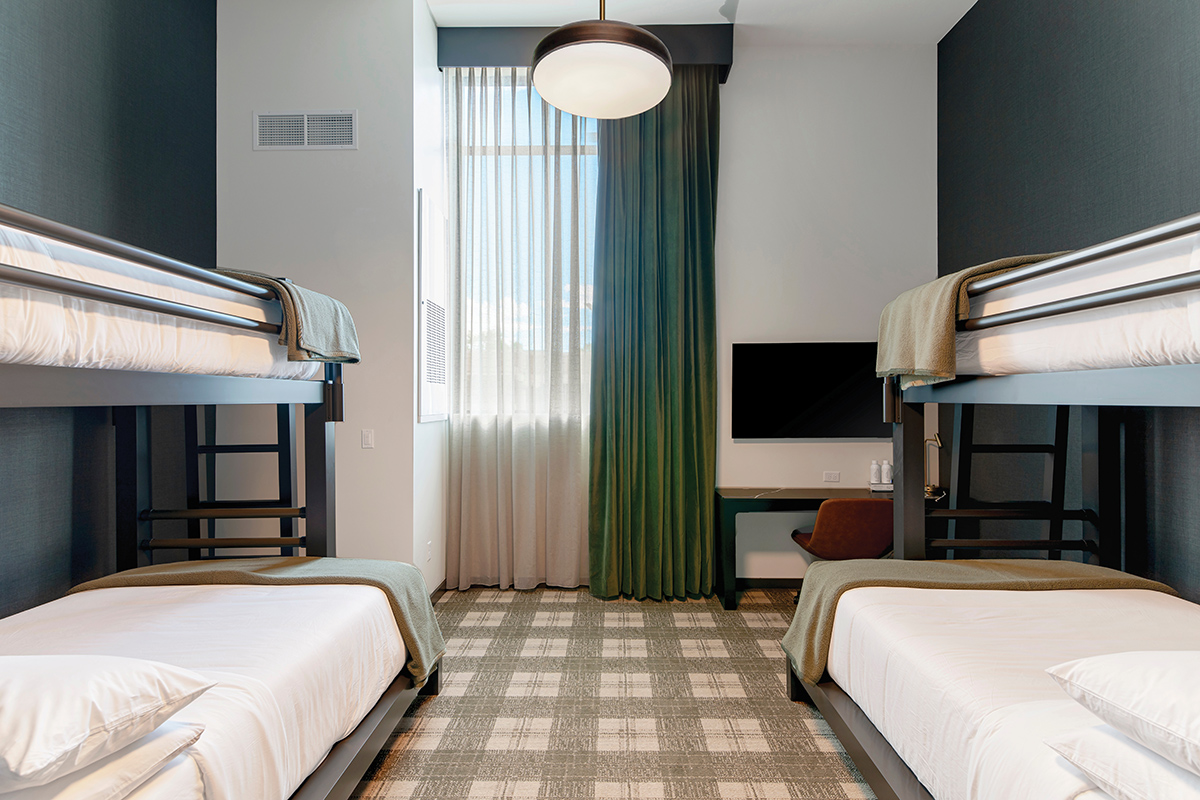
Throughout the property, the balance between history and modernity feels carefully calibrated. Classic Western hospitality provides the foundation, expressed through tactile materials, warm textures, and subtle nods to Colorado’s rugged heritage. In the guest rooms—which start at 330 square feet but sprawl to 790 square feet for a suite—there are Nespresso machines, luxe bed linens, and bath amenities from Ranger Station that reference the Rocky Mountains without veering into theme park territory.
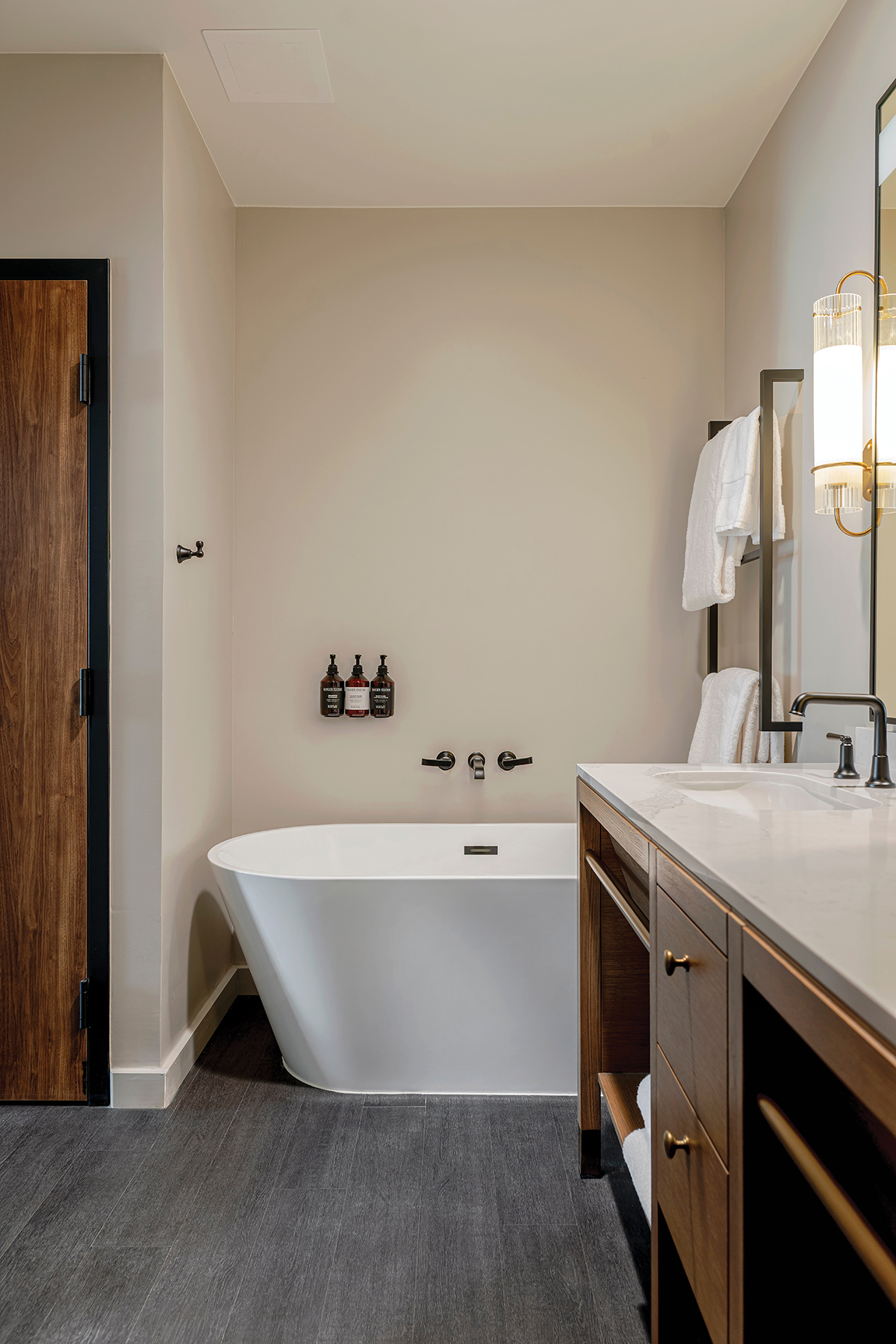
Yet the architecture itself is unmistakably contemporary. The sleek five-story building features expansive windows that frame sweeping Front Range views, while the spacious Blue Sky, Summit, and Longmont suites reject conventional hotel layouts in favor of residential comfort, complete with deep soaking tubs ideal for a post-hike steep. It strikes that elusive balance so many new hotels chase in that it’s polished enough to feel aspirational, yet comfortable enough that you immediately imagine extending your stay.
The property’s storied inspiration feels increasingly significant at a moment when many boutique hotels function as self-contained bubbles, disconnected from the cities around them. Hotel Longmont blurs those boundaries, and as a result locals are already browsing the rotating art exhibitions, gathering for rooftop drinks, celebrating milestones, or simply stopping by for coffee surrounded by books and art.
“I look forward to enjoying happy hour on the rooftop with friends in the near future,” Eubanks says. Visitors, meanwhile, leave with something more valuable than a room key: a sense of the city itself.
Years from now, the hotel’s team hopes residents won’t simply describe Hotel Longmont as a successful business, but as part of downtown cultural fabric—a place where first dates turned into anniversaries at that rooftop boîte, the hotel’s crown jewel.
“It uses a lot of clean lines, neutrals, and natural wood, and the greenery softens the space,” Tichenor says, noting that the goal there was to preserve the eye candy. “The views speak for themselves. They’re amazing up there, and that’s what we want it to be. The views are what you’re up there for. So it’s just a really special space.”
Something tells us Elizabeth “Betsy” Rowell Thompson would agree.