
Dandelion Arts Collective Uses Performing Arts to Foster Empathy, Healing, and Health Equity
Photography by John Robson

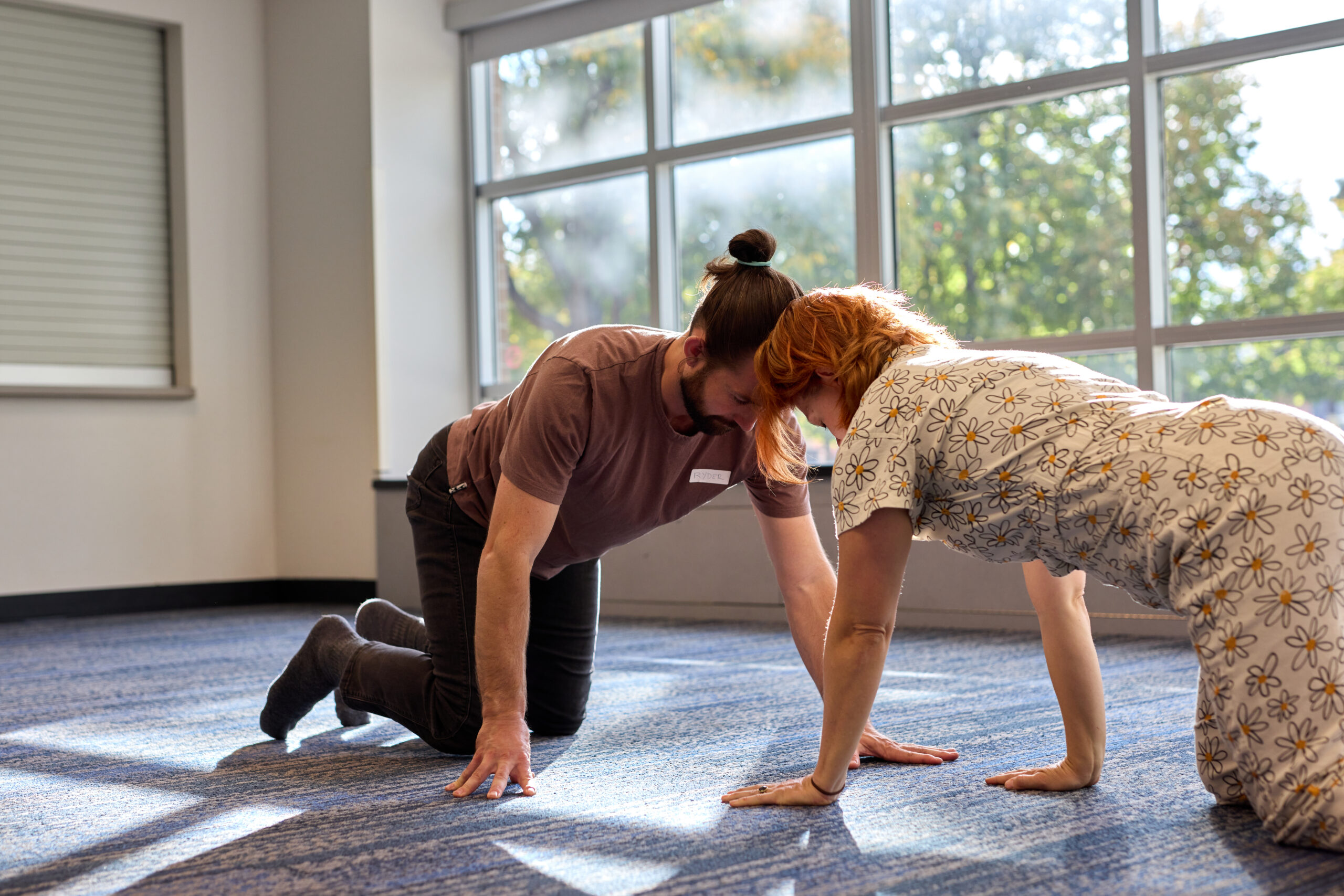
On a Sunday afternoon in October, a meeting room at the Longmont Public Library holds a small group of young students, their parents, and caregivers. Soft, upbeat music plays as pairs of kids and adults lower to their hands and knees, gently push the tops of their heads together, and try moving as one. The adult pushes toward the child gently, then the child reciprocates as the pair moves around on the carpeted floor, navigating and mirroring each other’s actions.
To the untrained eye, this activity may look like some sort of yoga exercise or a game of pretend. But for Mimi Ferrie Lee, the cofounder of Longmont-based nonprofit Dandelion Arts Collective, exercises like this are a small part of a large public health initiative.
“When you’re building connection with another person, it’s also an opportunity to build connection to yourself within your own body,” Ferrie says. “And, from a public health standpoint, when we’re more attuned to our own body, we’re more receptive to why an environment or situation is making us feel a particular way.”
These kinds of exercises—where participants mirror each other—help build empathy on a kinesthetic level.
“Empathy, I think, is one of the most important tools when it comes to communities thriving and people connecting across differences,” Ferrie says. “What makes us human is being able to empathize with another person’s experience.”
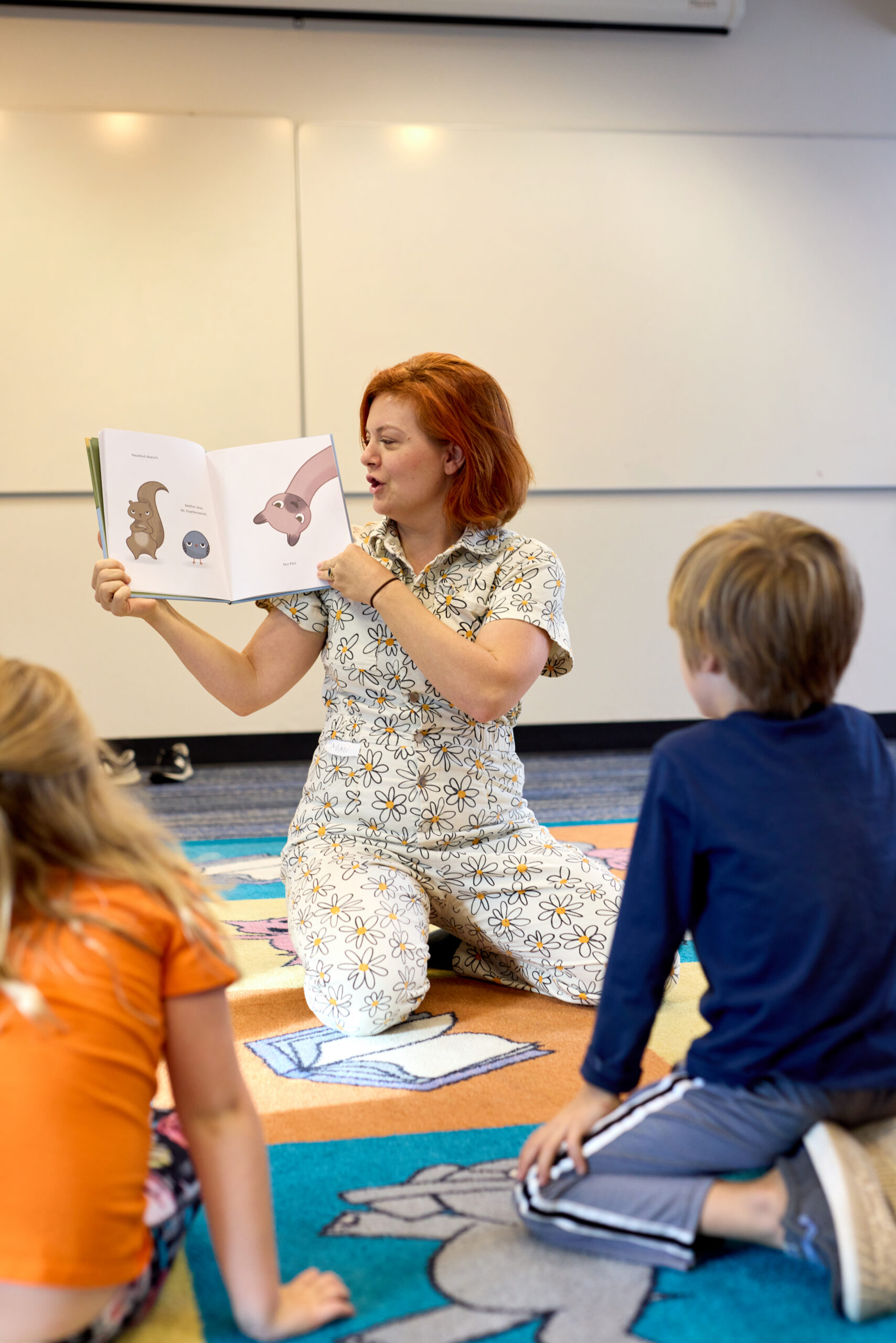
This class, known as Positive Play, ran each Sunday in October, welcoming up to 24 participants some weeks. Ferrie and her fellow Dandelion Arts Collective cofounder Kristel Jelinek Brown host an average of 14 classes like this one weekly from Loveland to Broomfield that draw more than 200 participants.
The collective actively partners with public and private organizations to promote health equity through performing arts practices. Its programs engage participants of all ages, from newborns to seniors in their 80s and 90s, with a special emphasis on children, individuals with disabilities or neurodiversity, people receiving social service support, and members of multilingual communities.
“The people we choose to focus on are those who have been strategically undervalued in society,” Ferrie says. “But all our programs in some capacity could exist for any age, in any population, in any group because it’s really about humanity.”
A Match Made Through Dance
Originally from Colorado Springs, Brown received her bachelor’s degree in acting from the University of Colorado in 2004. She then went on to perform musical theater in New York City for several years before pivoting to educational-related theater and community work, getting her master’s degree in applied theater from the City University of New York. The program involved exploring social justice themes through community-based theater with nontraditional populations.
“The master’s program really, really shifted so much about who I am as an artist and how I want to approach art making, and how to involve collaborators,” Brown says. She returned to Colorado after finishing the graduate program and having her first child, and reconnected with Ferrie around 2014 at Mountain Contemporary Dance Arts.
“I’m pretty picky about dance teachers because I’m a dancer too,” Brown says. “I could just tell that we were very aligned in the way she approached children and art making. She was so community oriented.” Brown quickly enrolled her daughter in Ferrie’s dance classes and, a few years later, enrolled her son.
Brown and Ferrie began collaborating on projects and workshops. The pandemic put some of their work together on hold, but when things picked back up again, they found their goals were even more aligned.
“At that point, Mimi was like, ‘I think we just need to start a non-profit,’” Brown says. Shortly after that suggestion, they formed Dandelion Arts Collective in 2023.
Bringing Performing Arts into Community Spaces
Today, Dandelion Arts Collective acts as an umbrella for numerous programs and nonprofits that Ferrie and Brown lead, including Anima Arts and Naked Truth Theatre Arts. More than 75% of the programs are free to participants, and sliding-scale and scholarship funding are offered for tuition-based programs. The collective gets most of its funding from grants, private donations, and partnerships with other organizations.
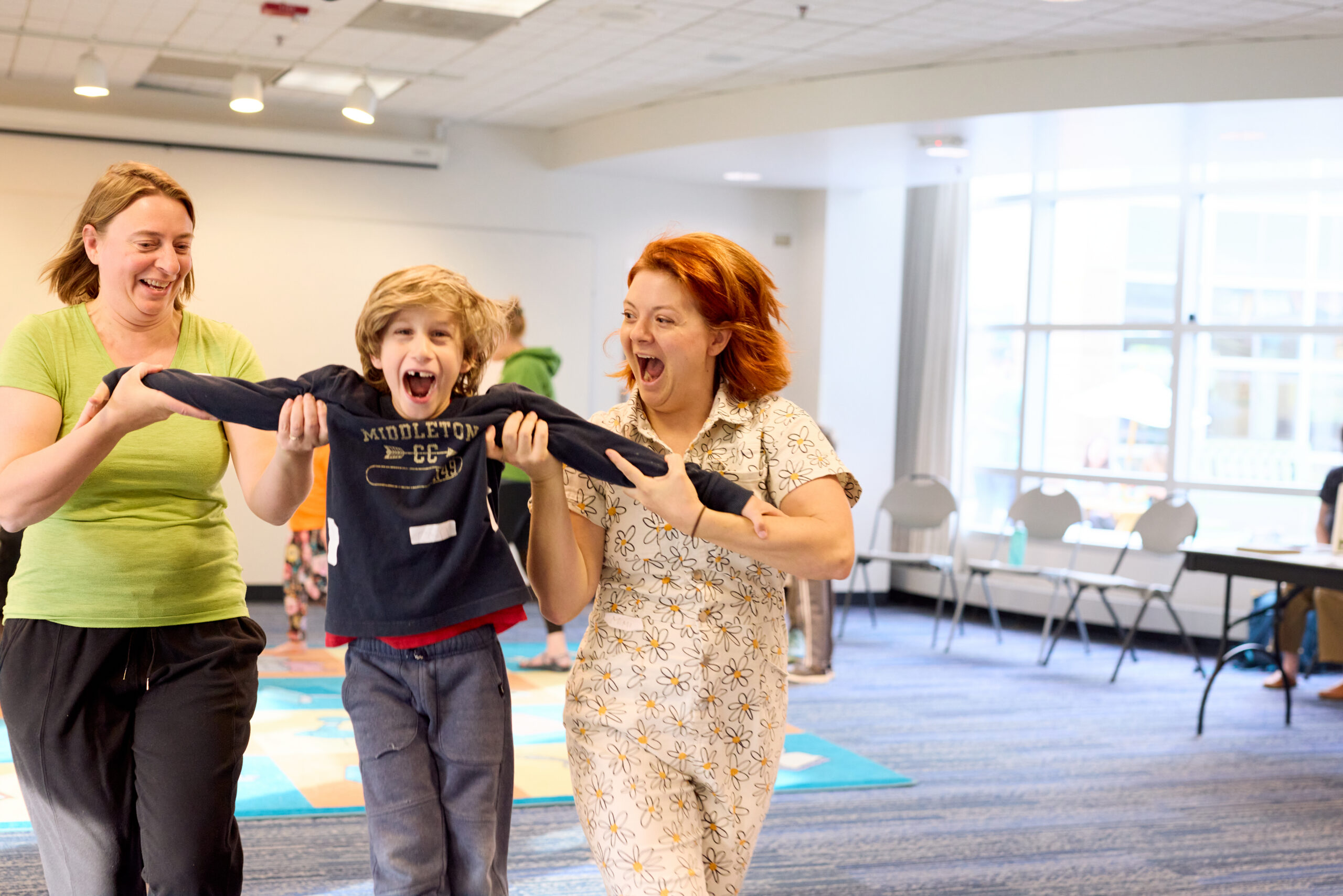
During Anima Arts classes, children and their families are encouraged to move, discover, and learn. They dance, play movement games, listen to music and stories, and participate in visual arts. As Ferrie envisioned, the classes happen in spaces like libraries, recreation centers, preschools, and museums, as well as at community events.
That includes Spark! Discovery Preschool in Frederick, which hosts Families Moving Together, an Anima Arts class for 3 to 5 year-olds and their families and caregivers.
“I’ve seen dads and grandmas out there wiggling. I’ve seen new moms with their newborns in tow,” says Paige Gordon, the principal at Spark! Discovery Preschool. “Mimi tries to eliminate the ‘I can’t do it’ or ‘I’m embarrassed.’ And it doesn’t have to be complicated.”
The class launched in 2022 and is free to families thanks to the school’s parent-teacher organization. Gordon says that, through movement, the classes provide many important lessons.
“The way Mimi sets up classes, she’s incorporating big-picture things—literacy, math skills, social and emotional intelligence, health topics,” Gordon says. “It teaches the parents how they can help their child and build a positive relationship with their child, while also increasing physical awareness and getting information about developmental levels and parenting young children.”
Similarly, Brown offers Naked Truth Theatre Arts classes that incorporate lessons about public health, sexual health, sexual identity, and intimacy choreography. Brown started Naked Truth Theatre Arts in spring 2023 and partners with Imagine!, FRIENDS of Broomfield, universities, and other organizations and schools.
The performing and participatory arts classes engage both professionals and amateurs—from elementary school students to senior citizens—in exercises designed to challenge comfort zones while safely exploring boundaries.
“As human beings, we live in an uncomfortable world,” Brown says. “So we have to figure out how we engage with stuff that makes us uncomfortable. That’s different than a crossed boundary. So how do you figure out what your boundaries are so you can explore
discomfort professionally?”
Because Dandelion Arts Collective is a 100% mobile program, the organization’s partnerships are one of its most valuable assets, according to Ferrie. Those partnerships include physical places and people like public health workers and fellow artists. As the collective grows, Ferrie and Brown have hired artists to work with them on specific projects.
They include Ryder Turner, an artist and educator who co-taught the Positive Play class with Ferrie.
“Where I think the healing is going to happen and where scientific research shows the healing is going to happen is through the arts,” Turner says. “It’s so crucial there are avenues for kids, adults, and elders to play. I think the way that Mimi creates spaces for this is unique.”
Healing in Community
Ferrie ends the Positive Play class the way she began it: leading the kids and their caregivers through a body scan. At the start of the class, the scan helps regulate everyone’s nervous systems and creates a feeling of safety before getting into a state of learning. At the end, the scan reminds everyone of what they practiced in the last hour and prepares them to transition into their next space.
“Being able to intentionally ground ourselves at the beginning and the end creates a container of safety and then helps us learn and then go back out into the world afterward,” she says.
Although Positive Play only ran for a month, Ferrie would love to see its concepts become part of school physical education programs. She and Brown design classes that can be integrated into larger systems but also are tailored to participant needs.
Ferrie believes that the more places programs like this exist, the healthier communities will become. That’s why community is a fundamental value for Dandelion Arts Collective.
“No one can heal, no one can grow, no one can learn in isolation. We have to heal in communion,” she says. “We’re doing things in community because moving together or acting together or singing together—those have the power and impact to bridge differences and allow us to really embrace the power of being in community.”