How Longmont Seniors and Northern Arapaho Elders of Wind River Built a Friendship—and the Documentary That Captured It
Last spring, 14 Northern Arapaho elders and their families arrived in Longmont from Wyoming’s Wind River Reservation. Their first stop was the Longmont Museum, where they joined a group of local seniors for a meal in the building’s atrium. Long rectangular tables were draped with red tablecloths and a barbecue buffet was ready to be served, along with two large sheet cakes—one frosted with a mountain sunset and “In Celebration of the first Senior Center Elder Exchange” piped across the middle.
A woman stepped up to a microphone.
“I have the honor of saying welcome home to Northern Arapaho elders,” says Carmen Ramirez, the retired director of community and neighborhood resources at the City of Longmont.
Applause followed. At the tables, the early hesitation gave way to easy conversation: grandkids, jokes, shared stories.
This moment opens Where We Meet: Stories of Healing and Hope, a short documentary released this spring by the City of Longmont in collaboration with Longmont Public Media. The film follows the first Elder Exchange between a U.S. city and a sovereign tribal nation—a gathering that took place over four days in Longmont in March 2025 and four days at Wind River that July.
Longmont sits on land that was inhabited by the Northern Arapaho Tribe before the U.S. government forced them off their ancestral homelands in the 1860s and onto a reservation in central Wyoming in 1878. After several years of relationship building, the City of Longmont and the Northern Arapaho Tribe formalized a sister cities partnership in September 2021, the first relationship of its kind. An initial student exchange happened in 2019, organized through the Longmont Sister Cities Association.
The elder exchange grew out of a conversation between senior services manager Ronnie Maynes and Ray Ramirez, a retired Native American Rights Fund staffer who helped Longmont facilitate the sister cities partnership. When the idea started to gain more traction and the Friends of the Longmont Senior Center offered support to make the exchange happen, Maynes reached out to the city’s communications team to discuss how to capture the cultural exchange.
“Of course, we can read about it in an article, we can hear about it from someone else,” Maynes says. But capturing the event on video allows people “to truly see the impact, not only on the participants but between our two communities.”
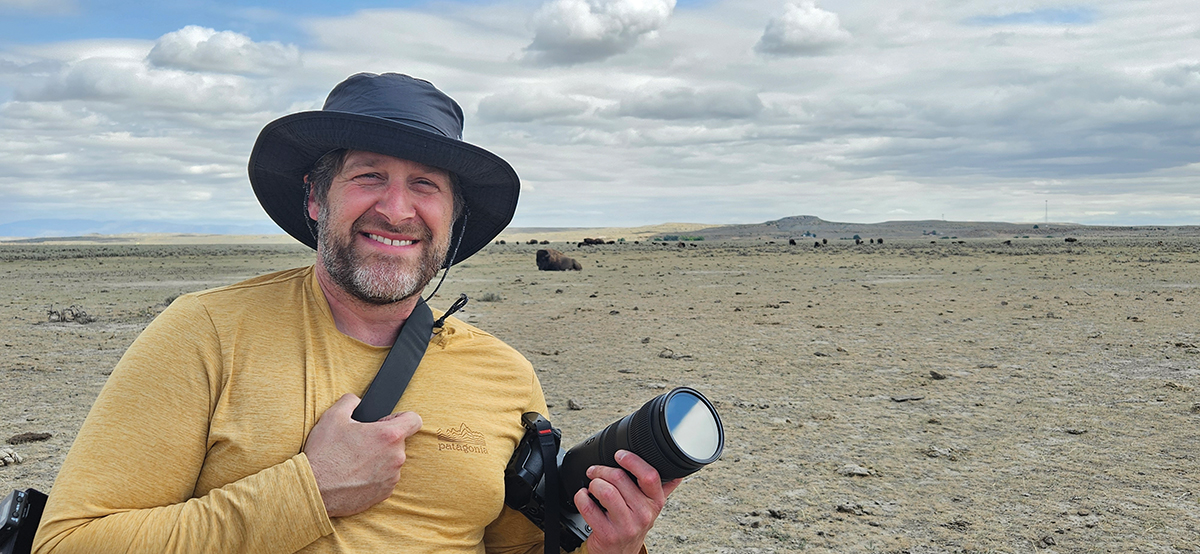
From there, the format took shape as a short documentary. Longmont’s senior communications and marketing manager Jill Lis and communications director Lindsay Diamond served as producers for the city. Nathan Venzara, an executive producer at Longmont Public Media, shot the footage and edited the final cut.
“I just felt so blessed that I was going to be able to be a witness to that experience,” Lis says.
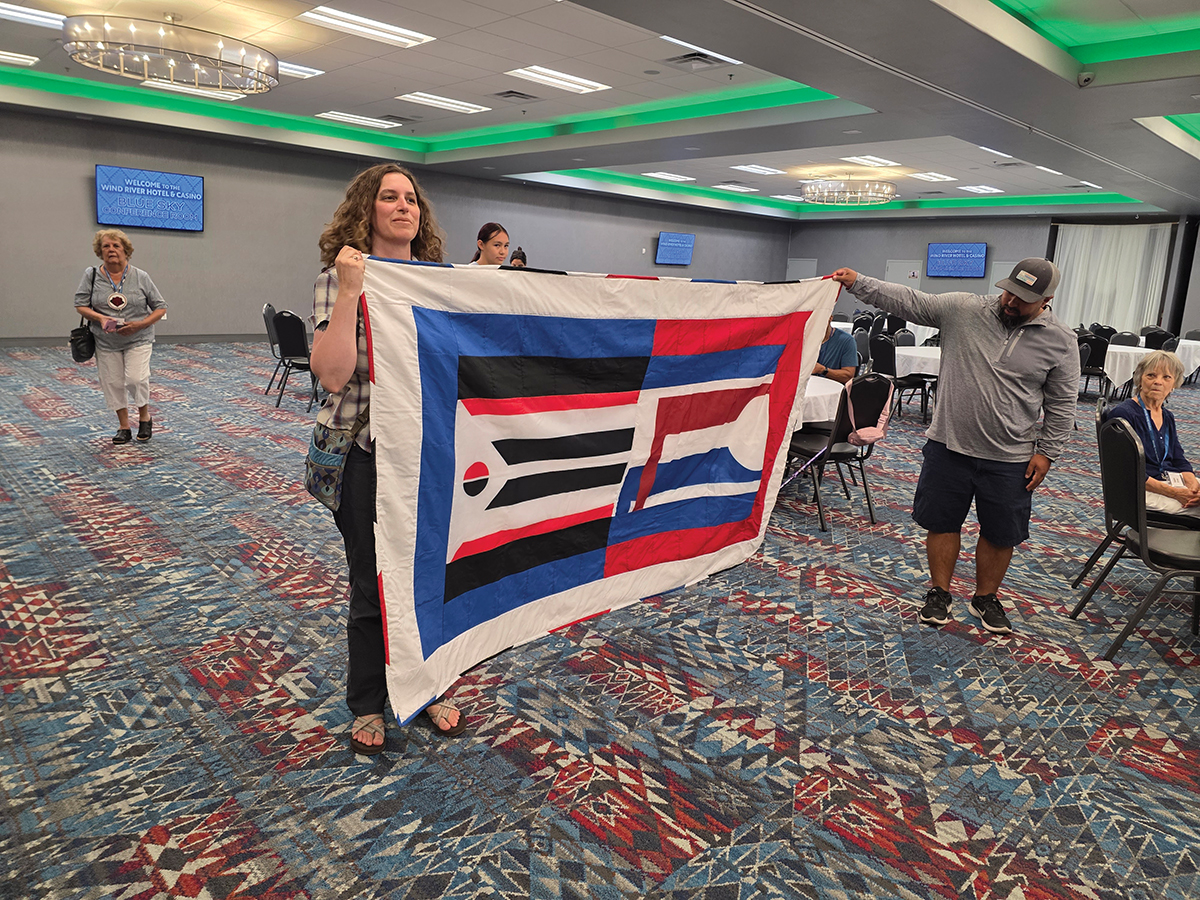
The Northern Arapaho elders’ four-day visit to Longmont last March included a day at the Longmont Senior Center, where the two groups played pool and the Mexican board game Lotería, talked over coffee, and had lunch. Together they also made two quilts featuring both the Longmont and Northern Arapaho flags, one to keep in Longmont and one for the elders to take home. They also attended the Denver March Powwow.
The most emotional day was at the History Colorado Center, where the group saw “The Sand Creek Massacre: The Betrayal that Changed Cheyenne and Arapaho People Forever,” an exhibit on the 1864 U.S. military attack on a peaceful Cheyenne and Arapaho encampment in southeastern Colorado that killed more than 200 people. The exhibit was built in consultation with the Northern Arapaho Tribe. The Longmont seniors walked through the exhibit alongside the Northern Arapaho elders, for whom Sand Creek is part of their ancestral history.
“I knew about the Sand Creek massacre, but when we got in there and I started to read everything, you know, it hit me. This is what they call historical trauma,” says Jody Jorgenson, a Northern Arapaho elder, in the documentary.
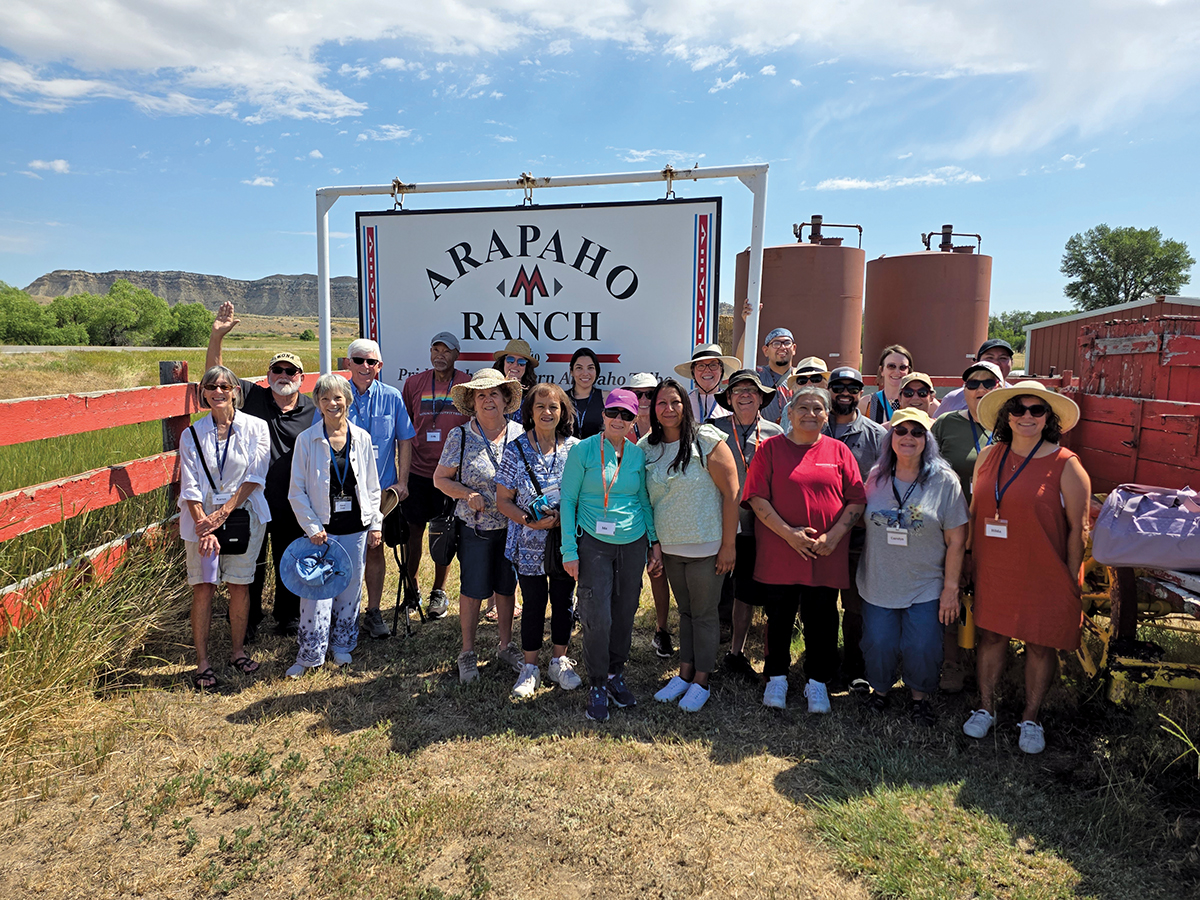
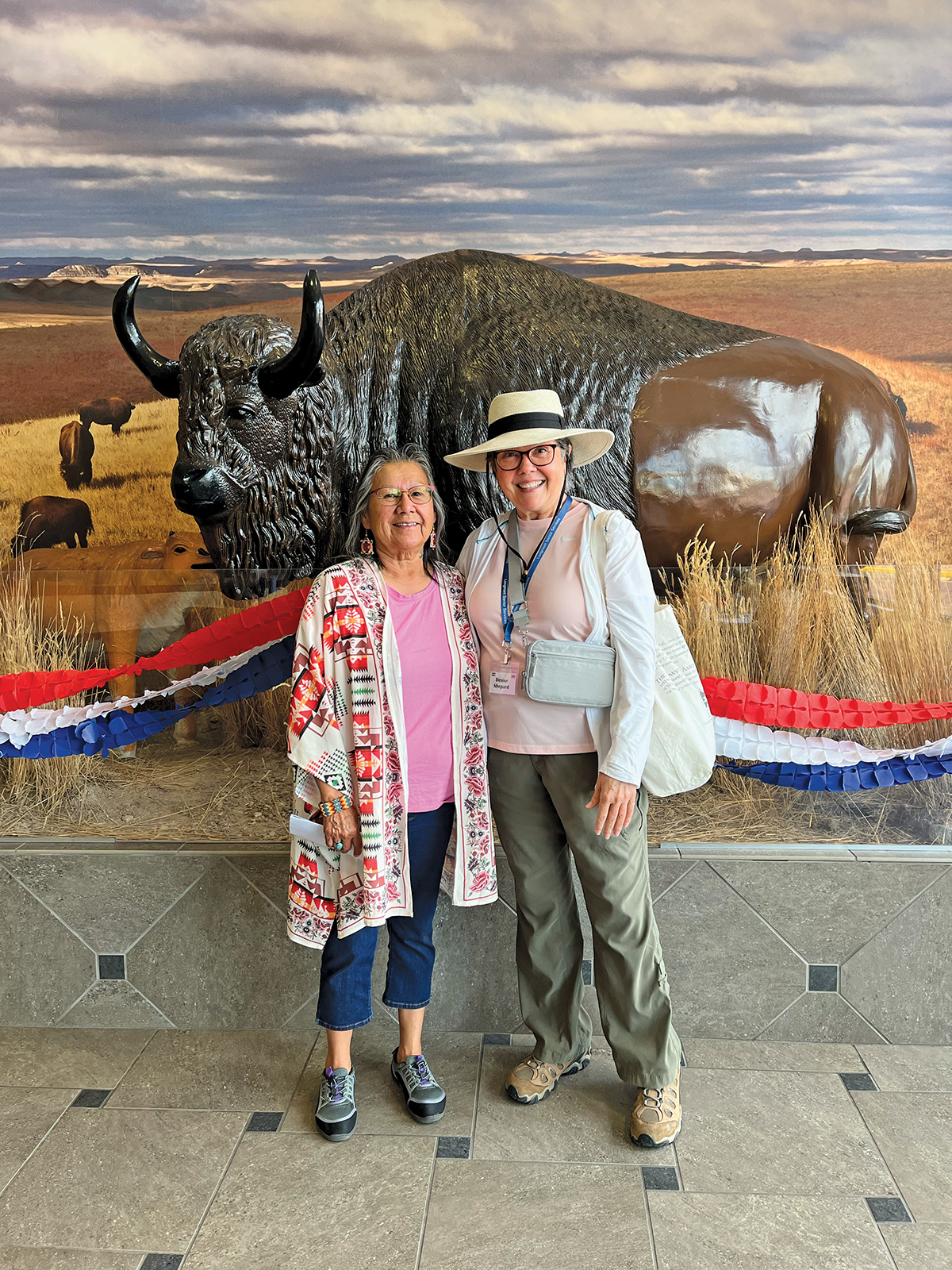
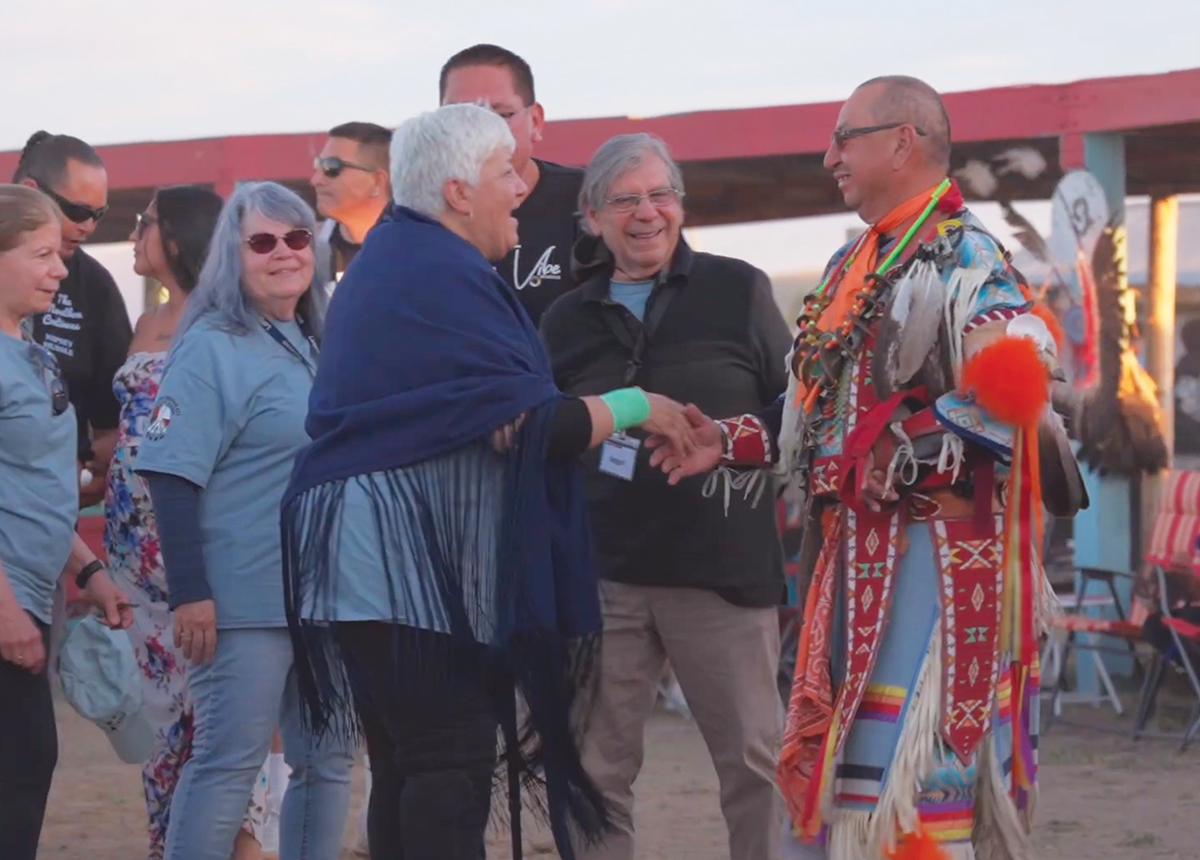
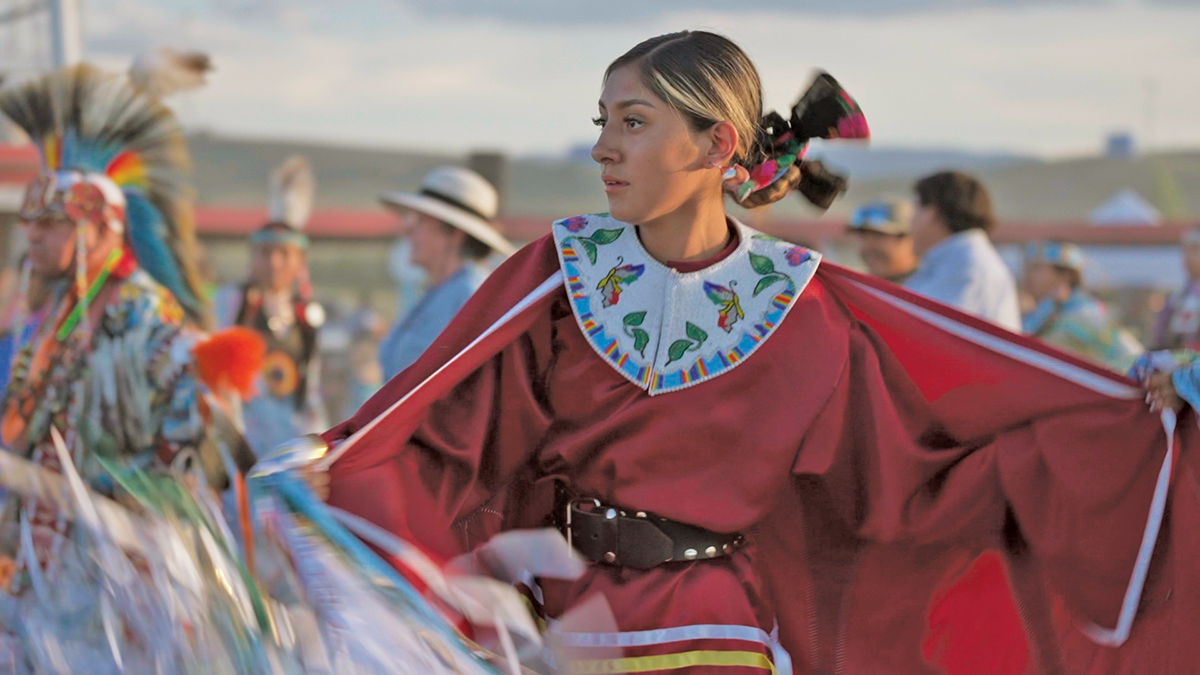
In July, a group of 19 Longmont seniors made the trip north to the Wind River Reservation in Wyoming, where they reconnected with the friends they’d made in March. The conversations and laughter picked up where they had left off. They toured the Wind River Tribal Buffalo Initiative, visited Thermopolis hot springs and Sinks Canyon State Park, and shared traditional meals at the Northern Arapaho Senior Center. On the final night, they joined their hosts at the Ethete Celebration Powwow for an honor dance.
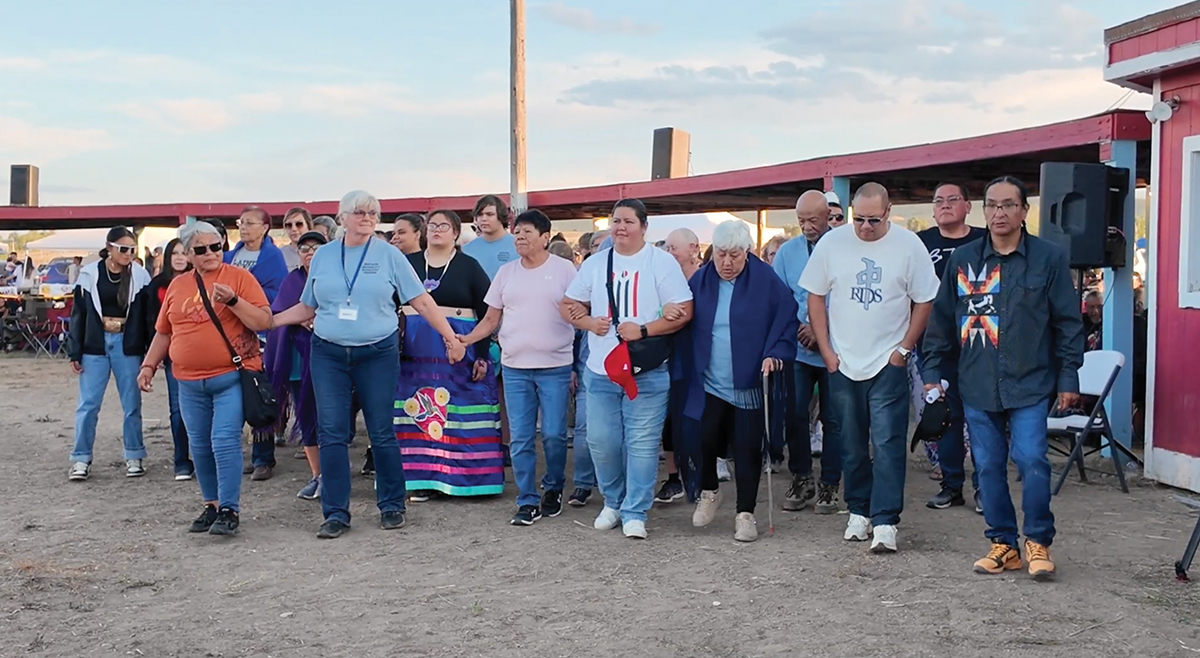
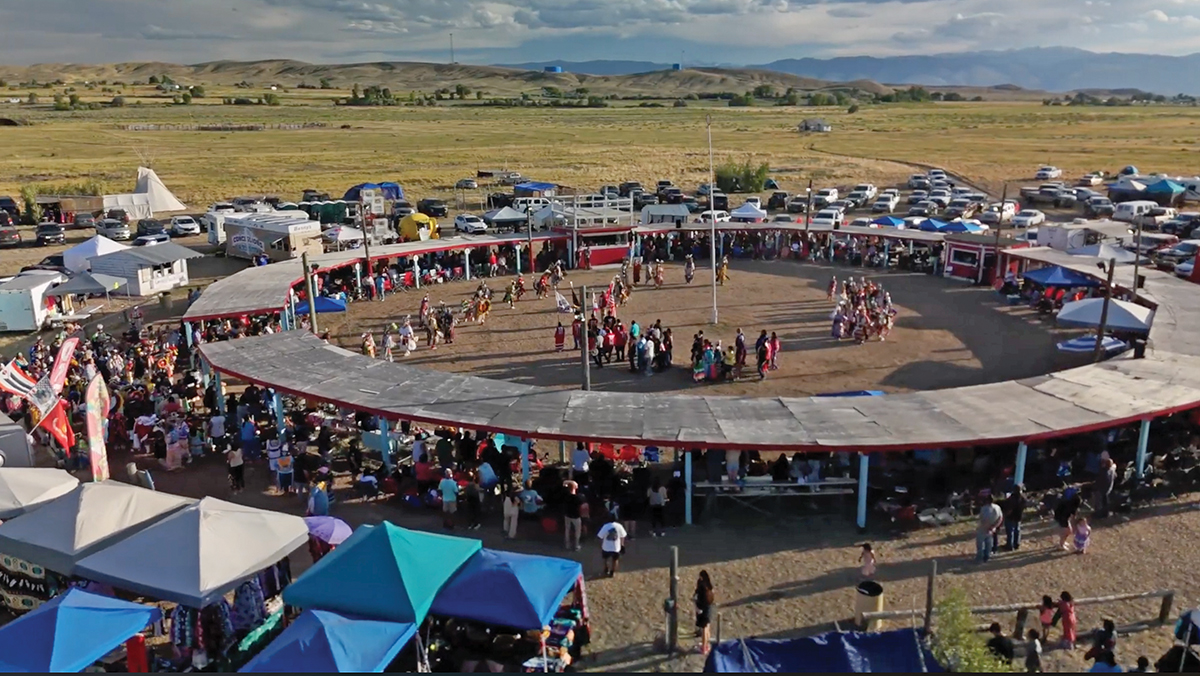
“They invited us to the floor with them, and we got to dance with them and walk with them,” Maynes said. “[It was] an honor to be embraced in their community, with their culture, with their elders. We were all a family, and it felt like a family.”
For Venzara, documenting this cultural exchange was unlike anything he’d worked on before. He’d produced shorter pieces for the city, but this was his first documentary of this length. At first, he wasn’t sure the documentary team would be able to make the trip to Wind River due to funding.
“It was a relief for me because I realize it’s such a big part,” Venzara says. “It’s an exchange—two different communities exchanging their culture. [Longmont] was only one part of the story.”
Before filming began, the entire team, including the seniors who would participate, sat through cultural training led by Ray and Carmen Ramirez, a married couple with deep experience in Native American community work who helped facilitate the relationships with the Northern Arapahoe, both for the youth and elder exchanges. The sessions covered Northern Arapaho history and offered guidance on how to be respectful guests. The team learned the importance of waiting their turn in conversations and listening before speaking.
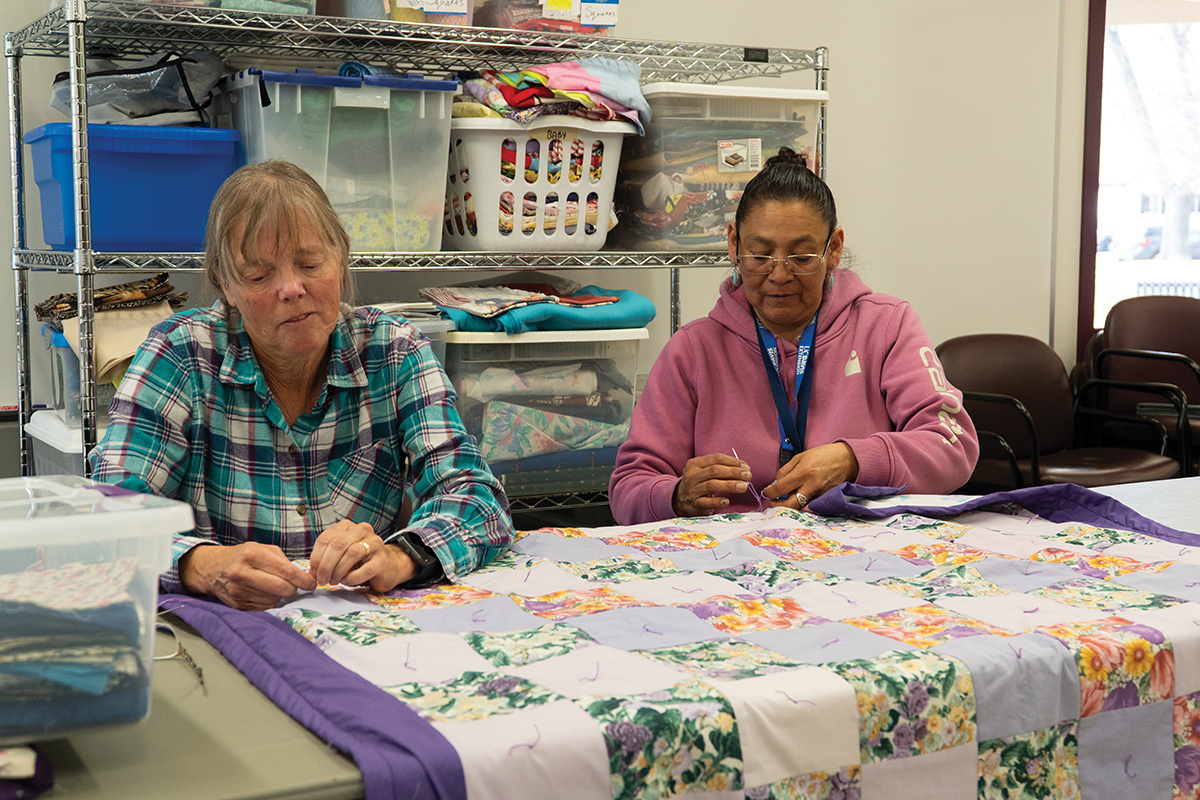
Even with the training, the interviews weren’t easy. Some Northern Arapaho elders opted not to be interviewed. Of those who agreed, one started but stopped when it became too emotional. “She didn’t think she could get through it,” Venzara says.
During one moment at the Ethete Celebration Powwow, an Arapaho elder Venzara had been filming gestured for him to come over and handed him a gift: a bandanna embroidered with the Wind River insignia. Venzara says it was one of the most meaningful moments of the project for him.
Back home, he went through seven drafts before locking the cut. “There was so much I shot that didn’t make it in,” he says. “To me, that was the hardest part. There was no way to include everything.”
An early version of the film premiered at the Longmont Senior Center in November 2025 for Native American Heritage Month. The final cut was released this May.
For both communities, the exchange was life-changing. Participants have stayed in touch—with calls, plans for visits, dinners when someone passes through. They hope others will get to experience it, too.
“You need to come down here,” Jorgenson tells fellow Northern Arapaho. “You need to see the country. You need to see where we were at. You need to start looking at what our history was. We need to continue the relationship.”
And the relationship is continuing. Another group of Northern Arapaho elders comes to Longmont July 15 to 19. The city plans to expand the program to increase the number of participants from each side.