The Colder Months Are an Opportune Time to See Birds of Prey
Winter is prime time for spotting birds of prey around the city’s reservoirs and open spaces. In open water that attracts waterfowl and mammals, as well as in nature areas with long-distance views, eagles and certain kinds of hawks and falcons come hunting.
“Longmont has so many birding venues,” says Carl Starace, a local birder who guides bird-watching trips through Longmont Open Space, Boulder County Audubon, and Niwot Birders Group. He has been birding actively for more than 35 years. “While most birds are here in the spring, winter can be a good time to see birds of prey.”
Starace describes some birds of prey that can be seen in the winter in Longmont and the best places to find them.
American kestrel: The smallest and most common falcon in North America, the American kestrel frequently hunts by perching on power lines and poles. It can be found in the Longmont area year-round.
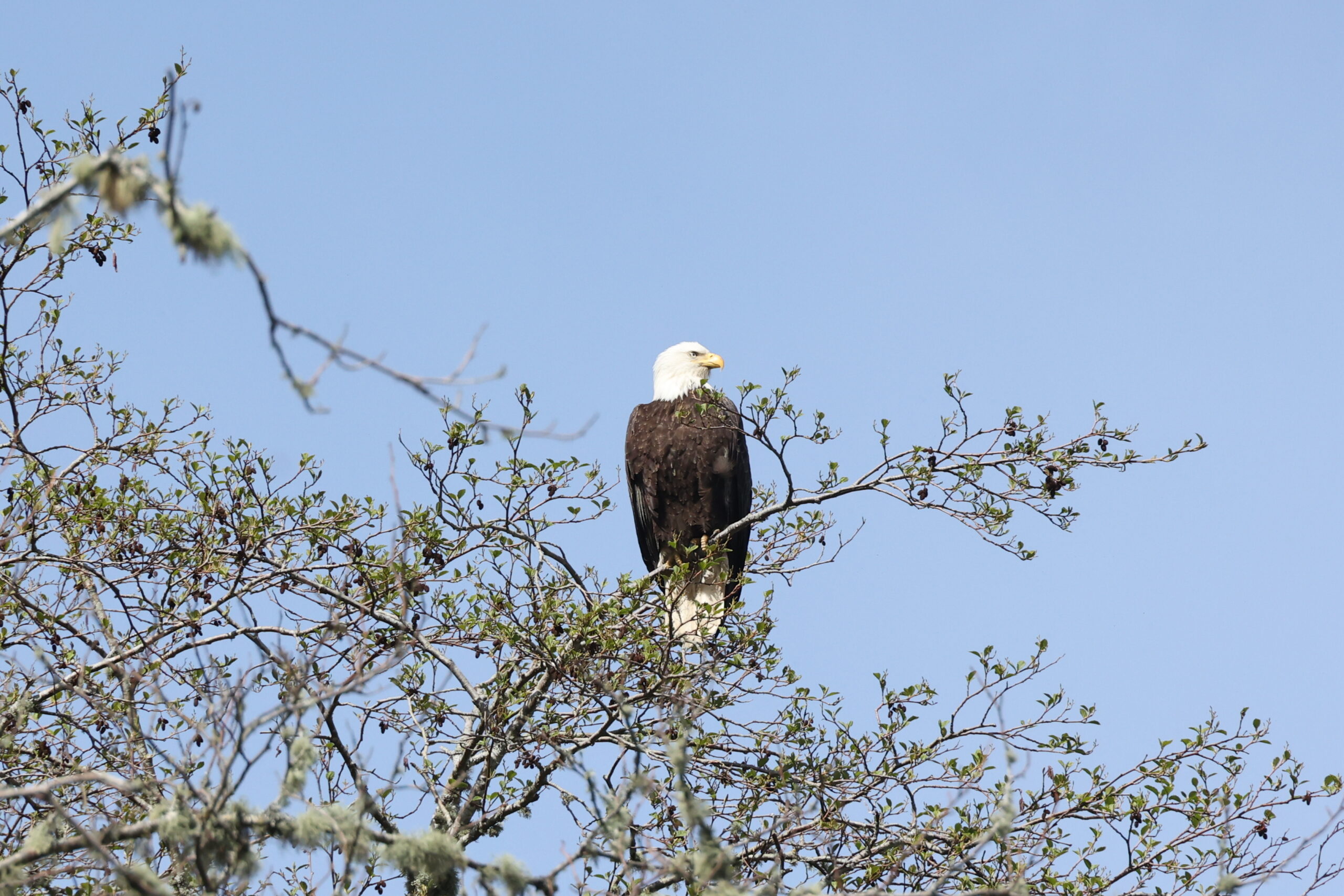
Bald eagle: Bald eagles are found across North America and can be seen in Longmont year-round.
Ferruginous hawk: The largest hawk in the U.S., this bird comes to the Longmont area for the winter from northern states and Canada in search of food.
Golden eagle: Golden eagles live and breed in the area, so they’re here year-round, but they’re seen less frequently than the bald eagle.
Northern harrier: This raptor can often be seen flying close to the ground in search of prey. It is found year-round in Longmont.
Peregrine falcon: Known as the fastest bird in the world when diving for prey, this falcon can launch itself at more than 200 miles per hour. It’s in the Longmont area year-round.
Prairie falcon: A rare sight unless you go to a nest, this falcon can be found in the Longmont area throughout the year if you know where to look.
Red-tailed hawk: The most common raptor in the U.S., this hawk can be seen year-round in Longmont.
Rough-legged hawk: This hawk heads south to the Longmont area in the fall and stays for the winter in search of food.
SIDEBAR:
Best Venues to Spot Birds of Prey in Longmont
Bodies of water such as Lagerman Reservoir, McIntosh Lake, Golden Ponds Park, and Union Reservoir are prime places to view birds of prey because they have large populations of rabbits and prairie dogs. They also are home to ducks, geese, coots, and, of course, fish. Nature areas like Sandstone Ranch and Rabbit Mountain provide wide-open spaces where raptors can look for food and are able to see for a long distance.